
Description
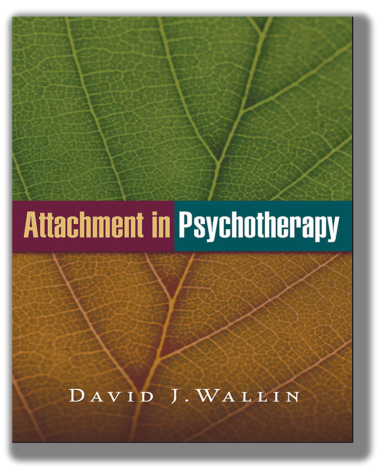
This eloquent book translates attachment theory and research into an innovative framework that grounds adult psychotherapy in the facts of childhood development
Advancing a model of treatment as transformation through relationship, the author integrates attachment theory with neuroscience, trauma studies, relational psychotherapy, and the psychology of mindfulness. Vivid case material illustrates how therapists can tailor interventions to fit the attachment needs of their patients, thus helping them to generate the internalized secure base for which their early relationships provided no foundation
Demonstrating the clinical uses of a focus on nonverbal interaction, the book describes powerful techniques for working with the emotional responses and bodily experiences of patient and therapist alike.
Dr. Jules Burstein (verified owner) –
For psychotherapists, like myself, who are persuaded that the reality of the of the actual forms of attachment that infants and toddlers have to their caregivers trumps psychoanalystic notions (e.g. Melanie Klein) that the child’s internal fantasies are more determinative of healthy or pathological development, David Wallin’s book will be a welcome tonic. He has engagingly described three paradigmatic deformations of attachment that lead to three kinds of character impairment — the Dismissing Patient, the Preoccupied Patient and the Unresolved Patient, and provides stimulating vignettes from his practice to indicate the nature of what is wounded and damaged in each, followed by various kinds of interpretive diaglogues, and “ways of being” of the therapist that tend to foster constructive personality change. Finally, he is one of a growing number of psychotherapists to incorporate Buddhist teachings (particularly the use of mindfulness meditation) into his clinical practice with what appears to be encouraging results. His book is eminently readable and even when I disagreed with some of Dr. Wallin’s ideas, they were always thought-provoking, and in the service of a more enlightened and effective psychotherapy.
Learning Curve (verified owner) –
Patient: OMG! Just read a great book!
Therapist: What’s the name of it?
Patient: Attachment in Psychotherapy by David Wallin. Really engaging, very readable. It’s good stuff!
Therapist: So, tell me what stirred…
Patient: Well, I especially liked Wallin’s idea of the “window of tolerance,” and how that works bidirectionally. And I was happy to see that he obtained his patients’ permission to tell their stories. That shows his true respect and understanding that the work is always co-created. It also sends a message of consideration and caring. Like I said, it’s good stuff!
Therapist: (nods) What else about it comes to mind?
Patient: Wallin’s mindfulness! His authenticity in the consulting room and his willingness to self-disclose, even thoughts that are difficult to express. It becomes contagious! It’s an excellent model for the patient. And for therapists too.
Therapist: (smiles) Are you trying to tell me something?
Patient: Haha! Just saying! No really, the academics are rigorous, but the book is easy to understand and absorb. And Wallin welcomes the plurality in psychoanalytic thinking, sees it as enriching the work – though his core thoughts are most closely allied with relational ideas.
Therapist: Cool! Anything bother you about the book?
Patient: Yeah, it’s too short! Hope he does a follow up, soon!
Therapist: Haha! Final thoughts before we go?
Patient: Wallin writes refreshingly with clarity and insight, encouraging the reader to associate to her/his own, “unthought known” ideas. It is clear that Dr. Wallin is a dedicated practitioner whose goal is to guide his patients (and himself) from rupture to repair. His desire, as expressed in his quote from E.M. Forster, is to “only connect!” And that he does!
Therapist: Wow! I am going to run right out and buy this book!
Patient: (boy, what a Strange Situation!) Great! Better hurry! Enjoy!
Bodhigirl (verified owner) –
David Wallin has elegantly articulated a process that many of us in the psychotherapeutic field have practiced intuitively for many years. The contribution his book has made toward integrating psychotherapy with a mindful practice, with hands-on clinical teachings, has helped give a language and specific tools to the next stages of attachment theory and therapy.
Not only is he a great storyteller in giving us the background for attachment theory and therapy, his own practice evidences the deeper places that patients are able to open up within us, should we be humble enough, if we are open and available to the continuation of our own journey. As we are willing to progress in our own non-verbal, pre-verbal set of attachment issues in the room, work our own counter-transference as completely as we ask them to do their work, so our patients have space to grow.
We have known since Freud of the significance of the relationship in therapy. What Wallin does is take us to deeper places on a moment-to-moment basis. We are not the handler of the patient: we are the fellow traveler. Wallin inspires us to stay on the same road with the patient, not only in each clinical moment but in our other, less enlightened moments. It is a forever practice and not an event. Without this element of practice in psychotherapy, the inevitable challenges for all of us, would continue to erase the good work we do.
An invaluable contribution to the study of Self, for which I am grateful.
Valerie Johns, MA, MFT
Hermosa Beach, CA
Oz (verified owner) –
Many books will claim to change your life. By giving me the conceptual (not to mention terminological!) framework to understand myself at a fundamental behavioral level, this one actually is proving to be a significant contributor to accomplishing that very arduous task.
I can’t recommend Wallin’s tome too highly for those in search of self-knowledge, and in pursuit of self-repair. This is NOT just a book for therapists! Though as you can see from the reviews here, any serious practitioner of therapy WILL be putting this at the top of their must-read list. For the sake of emphasis, I’ll repeat myself:
This is NOT a book just for therapists!
I’m not a therapist – far from it: I’m an engineer. An engineer with deficits in attachment security which I can now articulate and see with far more clarity, thanks to David Wallin. Subjectively speaking, the level of confidence that I feel in terms of my ability to resolve my own very painful attachment issues has increased markedly as a result of reading this book. I don’t know that higher praise exists for a work dealing with this subject.
Objectively speaking, ‘Attachment in Psychotherapy’ represents a major work in the field of psychology (for both the clinical and theoretical aspects), standing comfortably – and rigorously – shoulder to shoulder with other major works in that discipline. In it, Wallin accomplishes two very significant milestones (in my non-professional opinion). The first is a synthesis of the current state of knowledge of attachment theory and intersubjectivity theory, offering lucid descriptions – often case studies – of how the application of this knowledge lies at the heart of efficacious relational psychotherapy. This alone makes the book damn near required reading for all students of the human psyche, but it’s the 2nd accomplishment which marks it as a major milestone and which represents what I believe to be Wallin’s more significant and original contribution: his seamless intergration of mindfulness, and the mindful self, into that aforementioned synthesis. This is brilliance. This is insight. This is major.
To put all of this another way, I will say this: if you are in psychotherapy, and your therapist has not yet read Wallin’s book, insist that they do so. If possible, before your next session. It’s that important.
peter j stein (verified owner) –
I find Attachment in Psychotherapy to be one of the finest, and most useful texts that I have ever read, related to the clinical practice of psychotherapy. Dr. Wallin masterfully integrates the complex concepts within the vast domain of contemporary psychoanalytic psychotherapy, incorporating the many vital ideas of Attachment Theory, Relational theory, and Intersubjectivity, in a beautifully elegant manner. He presents very intelligible interconnections between his ideas, that broaden and deepen one’s understanding of human psychological motivation. In describing the mutuality of the patient/therapist dyad, Wallin provides vivid, experiential descriptions of the psychotherapeutic encounter. Using an understanding of attachment styles, informed by empathic attunement, and infused with an intersubjective honesty, Wallin helps to give coherence to the diversity of one’s clinical choices, not by providing rigid rules, but through keen insights that detail how the patient and clinician, within the specific context of their relationship, are emotionally reacting to one another. Having just reached the final pages, I look forward to reviewing my underlines…Peter J Stein, MD, MA – Private Practice, Psychiatry, Rockville Centre, NY; Diplomate, American Board of Psychiatry & Neurology; Distinguished Fellow, American Psychiatric Association.
Ed Clark (verified owner) –
Wallin’s book “Attachment in Psychotherapy ” is by far a text that every therapist should read and become intimately familiar with. He outlines the attachment in children and their significant caregiver(s) and how this interaction, which eventually manifest into an intra-action of self and how the individual perceives the world and relationships based on this attachment. The book does an excellent job in helping the reader understand how early infant-parent attunement plays a pivotal role in how children form relationships in the future, as well as identifies the type of parenting style that most likely occurred. This knowledge is invaluable to the therapist in treating their clients. I found his book easier to read that Siegal’s book “The Developing Mind”(a book I also highly recommend). WELL DONE, Dr. Wallin.
Edward Clark, LPC., CCADC; Author of:
From Here to Serenity: Unraveling the Mysteries of Yesterday and Today for a Better Tomorrow
James Everett (verified owner) –
This is one of the better books I have read on the conceptual foundations of psychotherapy. Attachment theorists from Bowlby to Fonagy are discussed and their contributions clearly linked to understanding the functional deficits and suffering encountered in the clinic. I found the clinical vignettes and descriptions of counter-transfer heavier going although interesting. The quality of the writing is exceptional; the book was a pleasure to read.
Stumblinforward (verified owner) –
Explains the necessity of the therapist mad patient having a solid relationship in order for anything to truly be accomplished in therapy.
Anne Hammond-Meyer, PhD (verified owner) –
I have read a number of clinically relevant treatment books. I often find them helpful, and make use of the author’s perspective in my daily work as a psychotherapist. Nancy McWilliams has written 3 treatment books, which I have read until the pages fell apart. But then one day I stumbled on Wallin’s book Attachment in Psychotherapy. I have always valued attachment theory and how it informs my work, but I was transformed as a therapist by Attachment in Psychotherapy. I have since attended both workshops that Dr. Wallin has brought to Seattle. But here is why you should buy the book: 1. It is practical. You will understand better who is sitting in front of you in your therapy office. 2. That person will make more sense to you. 3. You will write more effective treatment plans. 4. You will better understand how to individualize your relating stance with your client. 5. You will have a more dynamic understanding of their personality. 6. You will Enjoy your relationships with clients better. 7. You will help more people and feel more effective as a therapist. Regardless of if you are a generalist or treat a special population. This book is a must read. A training must! As with McWilliams, my copy is falling apart. I am just going to have to buy another copy of Attachment in Psychotherapy.
universe (verified owner) –
I am a clinical social work in practice. I found this book very helpful overall. It deepens understanding of attachment theory and how it looks like in real-time practice. I feel some points are repeated emphasized in different chapters. However, it does help me to value them and reinforce something important to keep in mind while practice. I love the therapy excerpt included, which makes it easier for people like me to really grasp how to apply skills mentioned in the book.
Max Littman (verified owner) –
As a psychotherapist in his first years in practice, I have found Dr. Wallin’s book to be extremely helpful in integrating the practices I already use into a more integrative, cohesive framework and I think in turn making me more creative, present, strategic, attuned, connected, and effective as a therapist.
The presentation of attachment theory and research in this book has opened my vision to a through line between my preferred approaches: ACT, psycho-education, schema therapy, motivational interviewing, trauma informed care, and attachment focused family therapy. These therapies, approaches, interventions, and frameworks to me all echo the basic point presented by Dr. Wallin: finding a method that works to open a space of internalized secure attachment allowing for openness to, awareness of, and engagement in present moment experiences.
Charmant (verified owner) –
Others liked it, i was mixed but it was used successfully as a textbook.
Todd Hudson (verified owner) –
This book deeply and skillfully explains and integrates attachment theory, interpersonal neurobiology, and mentalization based treatments like no other book I have read. As a humanistic psychotherapist, this shed light on why some of what I am already doing has been effective and also opened many, many new pathways of how to move forward with my clients who have experienced attachment based trauma. I highly recommend this in both the print and Audible versions
Lynn (verified owner) –
I will use this book to help me understand the dynamics of the therapeutic relationship.
LU ANN JONES (verified owner) –
I think I am on my third, maybe fourth read of this book. It is very well written and targeted more to the therapist than the client. As such it is one of the few books that seeks to provide a perspective on how to use adult attachment styles in the therapeutic context. Should be one of the first few books a therapist picks up when starting into or trying to use attachment in the therapeutic setting.
SCarson (verified owner) –
Excellent book
Marian Morgan (verified owner) –
… in a long time both as a clinician and client. As a somatic psychotherapist, applying concepts in this book is already helping me go deeper with clients, as well as helping me go deeper in my own therapeutic experience.