
Description
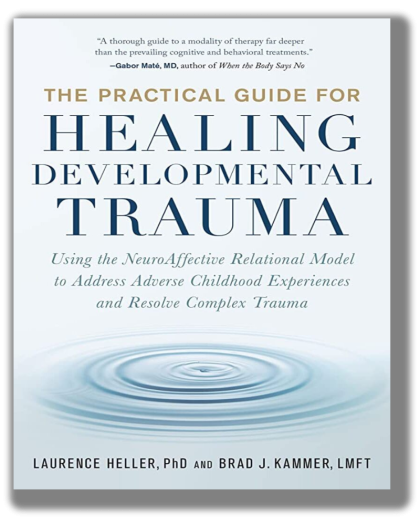
A clinician’s guidebook for treating developmental trauma–Apply the NeuroAffective Relational Model (NARM) to help clients overcome complex post-traumatic stress disorder (C-PTSD), recover from adverse childhood experiences (ACEs), and map post-traumatic growth.
The Practical Guide for Healing Developmental Trauma introduces a cutting-edge therapeutic model for addressing attachment, relational, and developmental trauma in a clinical setting. NARM is an integrated mind-body framework that identifies and treats the complex ways childhood trauma can manifest in interpersonal difficulties, maladaptive patterns, identity issues, and disrupted affect regulation.
Integrating the latest research on adverse childhood experiences, or ACEs, it arms psychologists, psychiatrists, social workers, and trauma-informed therapists with the skills and tools they need to help clients break free from the lasting effects of childhood trauma.
The Guide is a go-to tool that explains:
- The four pillars of the NARM therapeutic model
- Cultural and Intergenerational trauma
- Shock vs. Complex trauma
- Adverse Childhood Experiences and Complex Post-Traumatic Stress Disorder
- How to differentiate NARM from other therapeutic modalities
- NARM’s organizing principles
- How to integrate NARM into your therapeutic practic
Lisa Gillispie, LPC, SEP (verified owner) –
I had the privilege of reading an advanced copy of this book and am thrilled it is now out in the world. This book does an excellent job of laying out the map of the NARM model for working with developmental trauma. While the model is complex, the book presents it in a comprehensive, clear, easy-to-understand, and user-friendly way. For those who have already read the first book Healing Developmental Trauma, The Practical Guide is a wonderful companion. For those who haven’t read the first book, be assured this book stands on its own.
Throughout the book are practical, self-reflective exercises that the reader can use for their own personal growth as well as bring into therapeutic work with a client. There are also 2 transcripts of client sessions that each author conducted. These transcripts do a wonderful job of giving us an inside look at the thought process of each author as they share their reflections informing their thought process and interventions – a peek behind the curtain so to speak. We can see how the different concepts described in the book show up in actual sessions. This is invaluable learning for me.
I especially appreciated the discussion on trauma and the distinction between shock trauma and developmental trauma and how they each require a different approach to support healing. The chapter on agency (chapter 5) is pure gold for therapists especially and no doubt helpful for laypeople. I also especially love the chapter on the relational model (chapter 8). As a NARM therapist, one of my favorite things about the model is the emphasis on the relationship between therapist and client. For therapists struggling with burnout or feeling stuck with clients, this chapter will be incredibly useful. Therapists are in high demand these days and clients’ lives are complex and challenging. It can be easy to feel like we’re trying to empty the ocean with a teaspoon at times. This book overall, and especially this chapter, can help therapists support themselves and their clients more effectively.
I would love to see this book be required reading for all grad students in helping professions as well as all therapists. Yes, I may be biased :). That said, I cannot say enough about how helpful I have found NARM to be for me personally and professionally and I am thrilled this book is now out and more people will have access to this powerful and profound model. As we heal developmental trauma we become more fully human and help heal the world.
“Our vision is to bring humanity to the transformation of complex trauma. In this book, we have presented an embodied, relational, and depth-oriented model that we hope will advance greater humanization in the healing process. NARM is a therapeutic approach that supports reconnection to one’s lived experience, so that clients can feel more fully alive—and become more fully human.”
Marcia Black Ph.D. (verified owner) –
In “ A Practical Guide to Healing Developmental Trauma” …. Brad Kammer and Larry Heller, with humanity, optimism, and a vision to bring trauma-informed treatment into the mainstream of therapeutic practice, offer a remarkably accessible and comprehensive guide to the application of the principles of the NARM model, an approach to working with individuals who have experienced attachment and developmental trauma. The model, explicated fully in this book, examines the experience of connection and disconnection from oneself, others and the environment that results from complex trauma and which is addressed by the NARM approach.
After 40 years as a clinical psychologist, I was moved and inspired to encounter NARM, which offers a unique integration of relational, psychobiological, and psychodynamic approaches that has transformed and enlivened my clinical work. NARM’s emphasis on working in the here and now, informed by clients’ deep intentions for themselves, in a process which supports their agency, and their reconnection to disowned or dissociated needs, feelings, aspects of self, and to their life force, offers a powerful process of healing in which the curiosity, authenticity and presence of the therapist plays a significant role. The importance placed on the relational field in NARM, and on the self-reflection of the therapist, facilitates not only the client’s growth, but also that of the clinician.
The authors offer an understanding of the foundations of the NARM model, and a clearly articulated guide to how to apply NARM principles in clinical practice. Without compromising the complexity of the approach, the authors successfully present the essence of NARM in a way which is as relational as the model itself—with attunement to the challenges the reader may have learning new clinical skills, with language that is not intimidating, and with a priority on making it accessible to diverse groups of readers, including both the beginning and seasoned practitioner. The book is enriched by the inclusion of abundant clinical examples, with excerpts from actual therapeutic sessions, as well as by thoughtful exercises which invite the reader to reflect on the material presented, in support of their deeper understanding or integration. In this way, the book does what is rare in a clinical guides – it teaches in a way that parallels the important themes being taught.
If you are a therapist looking for an integrated, inspiring and effective model for treating complex, developmental trauma, with an approach to working with clients from a place of more curiosity and collaborative exploration and less “efforting” (and burn-out), while supporting ongoing professional and personal growth, this book is a must read.
Kristen Donigan (verified owner) –
The authors successfully articulate a powerfully transformative model, both beautifully humane and clinically sophisticated. NARM is not just an effective form of therapy, it’s a way of being – relating, growing and healing. Heller and Kammer embody the NARM philosophy and their words transmit ease, confidence and humility. The reader is held in respect and compassion, invited to be at once client and therapist, acknowledging we all have the capacity for greater wholeness. NARM illuminates how, on the part of both clients and therapists, even subtle or well-intended adaptations to trauma can get in the way of meaningful change. This discernment holds promise to resolve the perpetuation of trauma throughout our lives, but especially in therapeutic relationships.
As a NARM practitioner, visual learner and lover of language, this book satisfied a desire to have a detailed and thorough reference I can return to as I continue to relate to the model in ever deepening ways. My gratitude to Heller and Kammer for this careful articulation of their work. I eagerly await the next book(s) that will take us even deeper into the spiritual underpinnings of NARM.
Irem Akduman (verified owner) –
Neuro Affective Relational Model (NARM) is an amazing model that gives us a very comprehensive framework in understanding developmental trauma and its effects on our lives. Although it seems so simple at first sight, you are fascinated more and more as you perceive its depth. It is a very compassionate and humanistic approach and most importantly it has a non-pathologizing language. This new book is a very comprehensive manual for the therapists. It enables them to integrate this framework with their practice, widen their perspectives in making sense of developmental trauma, how it effects individuals’ development and their adulthood. In addition, it is an amazing support because it teaches how to develop a good relationship with the clients by respecting their boundaries and agency. The authors, Heller and Kammer, explained in considerable detail how NARM is used in the sessions and how change happens in the process, with actual case examples. As a NARM therapist, I find it very useful in understanding the framework and in applying it during the therapy session. The book also contains some reflective exercises which deepens the readers’ experience. I recommend it not just to psychotherapists, but also to anyone who is interested in self-growth. The Model’s view of the development makes it easier for us to understand ourselves, people around us and our relationships better, which might be an excellent starting point for changes that we want. Amazing resource for everybody.
Stefanie Klein, LCSW (verified owner) –
Brad Kammer and Dr. Laurence Heller opened a vault full of resources, information and heart in this new book about NARM. A must read for mental health professionals as well as any helping professionals working with developmental and complex trauma. This guide is also very informative for anyone seeking to understand the impact of their own adverse childhood experiences on their current life. I read Healing Developmental Trauma in 2012 and it fundamentally changed the way I approach my work as a psychotherapist as well as the way I experience myself in the world. This 2nd book on NARM gets into the nuts and bolts of the model. I love the exercises that can be used for personal growth or can be used with your clients. The transcripts of actual sessions really bring the model to life in a way that feels more experiential. Great book. Great contribution to the field of Trauma!
Gillian (verified owner) –
This is the 2nd and newest book on the NARM approach and I highly recommend ordering it! As a licensed counselor who has been trained in several different trauma approaches, I am excited to see that this book is currently #1 because I truly believe this approach is life changing work- that helps my clients, and is also changing my life.
Now more than ever- we need more empathy, heartfulness, love and connection in our world- and this book definitely helps readers connect to- and share more of that!! 💞
Leslie Filsinger (verified owner) –
The Practical Guide For Healing Developmental Trauma is an invitation for clinicians to develop a deeper understanding of who we are as humans, what we bring to therapeutic relationships, and how best to support our clients in developing authentic connection with themselves. The reflective exercises found throughout the book create opportunities for the reader to feel the principles of NARM in a deep and meaningful way.
As a practioner of NARM, and a Clinical Supervior, I am excied to share my passion for NARM and this book provides a comprehensible guide to implimenting the modality. For non-clinicians, this book also creates a foudation for deeper curiosity in how we relate to ourselves, opening a path to greater self compassion and authentic connection.
IGHM (verified owner) –
You can’t learn swimming by correspondence. And you can’t learn NARM–an advanced modality for healing complex trauma–by reading a book. But whether or not you have already trained in NARM or you are just trying to figure out what it is, this book as as close as you’ll get to learning this model without taking the course.
Let me first say, that NARM profoundly affected my personal and professional life, as both a client of a NARM therapist and a provider of NARM myself. It’s a profound, heartfull, and nuanced approach to healing complex trauma which has given me tools for coping with my own trauma, as well as help the clients who come to me for therapy. It has also helped me improve my interpersonal relationship, including my marriage.
Both authors of this book have been my teachers. They have poured their hearts into this book and gave it their all. They generously attempted to convey as much of their knowledge as possible using the medium of writing. With the help of reflective exercises, transcripts, and very clear, digestible, non-jargony language they sought to give an experiential taste of how this model works.
I hope this book gets the exposure and popularity it deserves.
Rhonda Mills (verified owner) –
This book is a wonderful, easy-to-read resource which supports me in working with my coaching clients, and also in my own learning process. The authors both are extremely knowledgeable and clear in how they distill the NARM process. I recommend this book for professionals and people from all walks of life who are interested in healing, wholeness, and living an integrated and connected life. It lays out the most up-to-date models used in NARM which have transformed and simplified my work and my own process.
The chapter on the Emotional Completion Model is one of the best I’ve seen on working with emotions related to trauma, and generally. Other chapters such as Reinforcing Agency, the NARM Relational Model, and the NARM Organizing Principles are also powerful and transformative. I’m imagining I will re-read this book again and again!
Katy (verified owner) –
I’ve had the experience of coming to NARM first as a client in therapy, second as a therapist-student at the Training Institute. This wonderful book encapsulates the wisdom, experience, depth, and reach that the NARM model of trauma treatment offers. This book (I’m only half way through so far) “talks” to my cells, my heart, and intellectual mind by offering clear, simple language for concepts and content that resonate and “land” for me as a human being, a therapist, and a life long learner.
This is a must read for anyone wanting non-fluffy, direct, well researched content from experienced clinicians who have respect and patience for the full depth of the human experience.
Having witnessed Brad and Larry–with trainees and in demo sessions of clients, I trust the content of this book as what I’m reading here is truly what these clinicians are doing, have been doing for decades, and fully grasp in a grounded, wise, intellectual and human way.
As a clinician, NARM trainings and this book specifically provide clear interventions for complex trauma versus other books and models where I’ve been left with abstract ideas of trauma, general “trauma informed” words and minimal confidence of what to actually do in my sessions with clients. I feel more confident, inspired in my work, and at peace when in relationship with clients who are coming for support for trauma healing, because of NARM.
A must read!
R. Grace (verified owner) –
“The Practical Guide to Healing Developmental Trauma” will be a great resource for therapists, clients, students, and anyone interested in learning about complex trauma and NARM therapy. It touches beautifully into intergenerational trauma, and the authors masterfully address complex topics in an accessible and readable manner. NARM therapy is a game changer, and this book lives up to that. This book is a worthy companion to “Healing Developmental Trauma,” as well. You might want to get two of this one, because you’re going to want to give one away.
Maureen Kebo (verified owner) –
With equal parts intellect and heart, Dr. Heller and Brad Kammer have provided a practical and comprehensive guide for anyone seeking to understand and work with complex developmental trauma. Complex developmental trauma is riddled with layers of complexity and can be overwhelming for clients and clinicians. The NARM model is unique in presenting a framework that holds the client as well as the clinician in a relational environment where change, healing and growth occur organically. Whether you are reading to apply to your work or take into your own recovery from complex developmental trauma, this book will support your journey.
Maren Deaver (verified owner) –
I have been waiting for this book to come out and know how much this will contribute to my continued learning of NARM. I am finding this book to be incredibly readable for such a complex topic. I am grateful to Brad and Larry for publishing this important work and for the care they have taken in presenting this material in such a thoughtful, heartfelt way.
Laura Carr, MA (verified owner) –
This book is an excellent guide to learning about how NARM considers the clinician an essential vehicle for joining the client on their healing journey. This practical guide clarifies how complex post-traumatic stress disorder produces adaptive survival strategies that can get in the way of what our clients want most for themselves. It has helped me to look at the client’s adaptations and not the trauma as a way to work with what comes up in the session moment-by-moment. It also offers the reader, who may not be a clinician, valuable information about how the adaptations may present in their lives. The book is sprinkled with experiential exercises as an additional bonus to invite a more embodied understanding of this depth-oriented model. The most helpful chapter consists of annotated transcripts of actual NARM sessions and how it is applied in a clinical setting. This practical guide communicates the necessity for relating to our clients through heartfulness which sets NARM apart from other modalities.
Crystal (verified owner) –
As a NARM trained therapist who’s been taught by both authors I can say that this book aligns with the title. It’s practical, applicable, and invaluable. NARM is a complex modality for good reason. However, the way the authors are able to synthesis NARM is so helpful and has deepened my learning even more. I often refer back to the book when wanting clarity or to understand something deeper and it seems that each time I pick it up I learn even more. I can’t say enough about how much NARM has impacted my life both personally and professionally and I find comfort in knowing that I have this book as an additional support in my life. I believe complex trauma is a public health crisis and the more people who learn about trauma and get support from NARM the more we can collectively heal. This book is one solution towards offering education, awareness, and healing for all who have endured complex trauma.
Michelle K (verified owner) –
The Practical Guide For Healing Developmental Trauma is an open invitation for understanding developmental trauma and its effects on our lives. The Neuro Affective Relational Model (NARM) is an amazing model that gives us a very comprehensive framework for addressing complex trauma. I don’t have words to express how grateful I am to have learned from Larry and Brad so early in my career.
I cannot say enough about how helpful NARM has been for me personally and professionally. As we heal developmental trauma we become more fully human and help heal the world.
Darin Johnson (verified owner) –
This book is amazingly organized and has brought so much insight to understanding complex trauma and understanding the Self, especially as it adapts to complex trauma. This book has brought so much to me personally and professionally. So grateful for this book to provide such knowledge, compassion, understanding and supporting working with complex trauma and humanity! For anyone connected to realm of complex trauma, this is an invaluable resource including understanding of the subject, helpful interventions, and such wonderful depth.
Keith N. (verified owner) –
The NARM Model as elucidated by Keller and Kammer in Healing Developmental Trauma encompasses the whole of human experiencing in the intersubjective field. As such, despite these exchanges (outside of therapy) sometimes appearing lackluster or superficial, NARM fully underscores the client’s thoughts, beliefs, sensations, and behaviors that emerge for the client during interpersonal exchanges. To write about how a how a model can be transposed on top of these exchanges in an effort to effectuate change, mind you without pursuing a goal or “getting somewhere”, seems daunting at best. While most therapies essentially target behaviors (i.e symptoms), Keller and Kammer delineate with precision how NARM never loose sight of acknowledging the humanizing element, and thus invite the therapist vis a vis the model to inquire about what a client truly wants for themselves. Certainly, as the author’s note, clients do end up presenting with a host of symptoms. However, NARM takes a direct, detailed, and delicate approach in an effort to ascertain how the client is organizing (their relationship to self and others) to gain a more sophisticated and insightful understanding of how they are likely supporting their own distress. The theoretical underpinnings alone are brilliantly aligned and informed by somatic work, relational therapy, as well as bioenergetics, neurobiology, & attachment theory, etc.) Keller and Kammer incisively describe how using the Four Pillars guide the exploration about what is driving the behavior, yet always maintaining attunement to what is happening moment-by-moment in the therapeutic session. To be explicit, the authors describe how the Four Pillars (Therapeutic Contract, Deconstruction of Experience, Supporting Agency, Acknowledging Psychobiologic Shifts) offer guideposts for the therapist to follow as sessions unfold. However, the next three pillars can inter-weave with one another to create a more organized and coherent flow within the exchange and likely within the client as well; and, the therapist can return to contracting for clarity. Each pillar can end up highlighting or eliciting new information which all support the therapists understanding of the client’s organizational patterns and internal distress. The author’s perspicaciously manage to not get stuck on any one aspect but maintain a cogently focused enumeration of the Model that is: NARM. Magnificent!
Deborah Mulgrew (verified owner) –
“The Practical Guide for Healing Developmental Trauma” is exactly what it says: a down-to-earth resource for clinicians working in the trauma field as well as anyone interested in learning what developmental trauma is and how to heal from these early wounds. I’ve read Dr. Heller’s first book on “Healing Developmental Trauma” and am currently being trained as a NARM therapist; this book really solidifies what I’ve been learning. It is a refreshing and much needed approach to understanding the complexities of developmental trauma – whether in individuals we with work with or in ourselves. The book includes a concise summary of the NeuroAffective Relational Model (NARM) along with reflective exercises that can be done alone or in partnership. Highly recommended as a resource which offers hope and support to those on their own personal journey of healing and growth!
Diane Ngoc Nguyen (verified owner) –
I have recommended this book to several clients already. It’s helpful to give people the language that is used in this type of therapy. I’m very glad that this can serve as a guide for anyone who is interested in learning the concepts, techniques, and ideas behind what has been so transformational in my practice.
T. C. (verified owner) –
I’ve been a student of NARM since 2018 and am on my 5th time trough the Level 2 practitioner training as either a student or training assistant. I’ve taken the master class and am in my second year of post-master training. I share this because though I’ve been steeped in NARM for the past 4 years I found so much in this book to deepen my knowledge and understanding of NARM. I found myself having many personal and professional insights and highlighted so many parts that I want to revisit. I particularly loved going through each pillar and the emotional completion model. The chapter on agency was probably my favorite. For any NARM students wondering if this book is just a revisiting of the material in class, it’s not. It has and will continue to deepen my learning, my personal healing, and my capacity and knowledge as a therapist and training assistant. Thank you Brad and Larry for this stellar piece of work that will be an essential part of my trauma healing library!
Update: the audio book is out now and I’m so grateful. Brad and Larry are reading the book to us with warmth and presence. I’m sensitive to audio book voices and their reading is so listenable and engaging for me. I didn’t have to rewind and listen again due to me tuning out mentally (something I do with monotonous or clinical voices). I’m happy to have the physical copy and the audio book – the physical for reference and the audio for listening again to see what new gems stick out. Thanks to both of you for reading the book yourselves!
Tori Essex (verified owner) –
This book is a great resource to understand the NeuroAffective Relational Model. I found the writing very clear and easy to follow and particularly enjoyed the client demo session transcript and annotated breakdown of the model in use. This is a must read for those who want to learn more about Complex Trauma and NARM.
Dr. Martin Lemon (verified owner) –
After 24 years in private practice, I began my NARM training journey. And what a richly rewarding journey it has been! The NARM model has helped me understand and support my clients and myself in ways I could not have fathomed before. I am much more effective in my work whether with individuals, couples or groups. NARM allows me to support my clients in a very different kind of exploration of how they are relating to their own internal emotional worlds, and very often it has helped them open up life-changing new capacities. But let’s be honest . . . NARM is a complex model that is challenging to learn. Fortunately, the NARM Training Institute offers abundant resources, several training levels, many videos of NARM sessions with helpful instruction and commentary, as well as supervision and peer collaborations. And now, a second book, “The Practical Guide to Healing Developmental Trauma.” Whether you are seeking an introduction to NARM or you’re wanting to deepen and strengthen your NARM skills and insights, this book will hit the mark. It’s written in a way that’s consistent with the first levels of NARM training in that it does not assume a prior level of knowledge or skill. It’s both practical and full of helpful perspectives that can challenge and help shift basic assumptions of how we can engage our clients. You’ll probably find yourself highlighting and re-reading many sections over and over. And, in my experience, my learning efforts have been rewarded very well. I’ve always felt like I’ve actually gotten as much or more from NARM training as I’ve invested in it, and that’s what I’ve experienced with this book as well.
Jenn (verified owner) –
My experience with NARM has been like taking a breath of fresh air! This book helps understand the basic fundamentals of the NARM approach and how to apply them in real life experiences.
The art of healing truly comes from the heart through genuine connection….. with that being said this book gives stepping stones to facilitate the process of connection and healing for anyone who wants to walk the path of healing with another being. We are all here to walk each other home and these stepping stones have given me a deeper understanding of how to explore the complexities of being human.
Bianka Hardin (verified owner) –
I am a NARM Trained Therapist, and this approach has been personally and professionally transformative for me. Brad and Larry have translated this very complex model into a practical guide that can be used personally or professionally and is so accessible and helpful to the reader. I can’t say enough good things about this book and this approach to healing complex and developmental trauma.
Ryan Jones, LCSW CCTP (verified owner) –
This is a crucial book, and a must-have for anyone treating trauma or interested in further healing their own. It provides a complete description of the key elements needed to resolve complex trauma. It provides a roadmap to the Self, the challenges we encounter as we reconnect with Self (called Survival Styles or Identifications), the centrality of disrupted attachment and involving the physical body in healing, and describes in detail the clinical process needed to progress through the journey. Something that is particularly appealing to me, is that the book shares how the NARM therapeutic process is deeply relational and compassionate. NARM also de-pathologizes trauma symptoms and positions them as adaptive, a notion that is itself healing.
The book is practical, and while the topics are by their nature nuanced, it is written with accessible and precise language. While it is clinical in its approach, I highly encourage interested non-clinicians to pick this book up, as the concepts and how they are presented are so valuable and vital for addressing C-PTSD. The book contains many self-reflection exercises that at first may appear simple, but upon reflection go deep. Also, NARM is inquiry-driven and the book provides many helpful example questions that a provider can ask clients to help them go deeper and resolve complex trauma. Finally, annotated client cases provided moment-by-moment commentary on therapeutic choices.
Therapists who are interested in treating complex trauma in their clients will find clear and helpful descriptions of key treatment processes, as well as how they are used together to help the client move through their healing process. Of particular note are Agency and Protest Anger which are described here. I am a therapist who uses NARM, and so may be biased, but I find both of these concepts are absolutely vital to treatment of complex trauma. Anger has at times been pathologized in therapeutic circles (and society and families), but NARM recognizes it as a vital source of energy that once integrated can lead to authentic self-esteem and greater self-regulation. Good stuff! Also, through discussion of Survival Styles the book provides a basis for therapists (and lay people) to conceptualize how we are organized in response to trauma, and so what our central challenges will be to healing, and it also goes deep and discusses links between trauma and personality disorders, something which is crucial to understand when treating complex trauma, and a vital clinical topic that many practitioners are challenged by.
To sum up, this is a book that is designed to serve as a practical resource, and one that brings together what I believe are the most vital concepts for treatment of C-PTSD.
Pamela J. Kraus, LCPC, MBA (verified owner) –
Versus those many, many books in my personal library, bought in my “self-help” seeking days, and in the years of amassing books to support my clinical practice as a psychotherapist, this book stands at the top of the reading heap as it has meant the most to me, personally, and professionally. Reading it I felt seen, heard, and known, in a way I never had before. And it is supporting me, in supporting my clients in healing from their own developmental relational and complex trauma. The work is deeply powerful.
I can say that this NARM book speaks so deeply to my own inner knowing, experiences, and implicit understanding (without the words or a framework for it) that I have carried and struggled with since the age of 8. It provides the framework, validation and an effective way-forward supporting my longtime passion for understanding and working to help heal developmental trauma. The book and the words on each page feel literally electric and vibrant and like water when you are thirsty. I feel a heartful connection to it. I don’t have the words for how deeply impacted I am with every word I read personally. Professionally, the book feels like the ‘holy grail” for supporting my clients healing from deep childhood and relational wounds.
This book is a must have, whether your interest is in helping yourself to heal from your own childhood and family of origin trauma, or as a helping professional. The book also speaks to the significance of the NARM understanding and model for other types of professional, cultural and community healing.
What an enormous and important impact NARM, now through this book, from Laurence Heller and Brad Kammer, is already having, and now will continue to have in so many more lives and places.
Full of gratitude!
Dylan (verified owner) –
As a therapist drawn to depth-oriented therapeutic styles and less to manualized forms of therapy, it has been revelatory and refreshing to read this book (aloud to my husband who is NOT a clinician) in the practical application of NARM therapy.
For both of us – myself and my husband – it has been an insightful read, full of talking points, reflective exercises to practice and mull over, and to take back to our own personal therapists. For this book is clear in its assertion that what is going on inside the therapist is AS IMPORTANT as what is going on inside the client. Tending to both sides of the relationship in a clinical setting is key, and this book is singular in explaining why this is so.
It is a readable, and understandable both for a clinician and for the lay person working on their own trauma although it might take a little more work for a lay person to parse some of the sections.
Because it is not simply page after page of text, it is broken up by reflective exercises, information, how to apply the information, and short-cuts, in each chapter, reading this book moves along at a fast clip and various sections are easy to reference.
Reading along with taking the NARM training will help any student to assimilate and integrate the information, also. For myself, a NARM trainee, this book has been an immeasurable help in integrating the information Brad Krammer has taught, and will be a go-to reference going forward.
Heidi Winn (verified owner) –
This book is a clear, heartfelt, articulate capture of a journey from the painful experience of being misattuned as a child to the splendor of being able to experience my wholeness in post traumatic growth. It’s written in an intelligent form which allows professionals to comprehend and apply to their practice with clients but also for any person seeking to explore their relationship with themselves and understand what lies beneath the symptoms or behaviors that prevent feeling connected to oneself and others. I am grateful beyond words for my experience with NARM which is culminated in this insightful, transformative, and necessary book.
Sarah J. (verified owner) –
The Practical Guide for Healing Developmental Trauma gives me hope for the future of trauma healing. This is a book that I would recommend not only to my therapist friends, but to my friends and family members. The information is relatable and presented in a way that makes this highly complex topic easier to digest and evokes a lot of compassion and understanding for my own challenges and for those of the people around me. I love the reflective exercises that supported me to slow down, connect to myself as I read the content. Love this book!
Olga S. (verified owner) –
Lays out the history of the CPTSD diagnosis, offers reasons why it hasn’t yet made it to the DSM (and why it should) and presents a clinical model for treatment. That said, the book is still well suited for someone who is curious about this diagnosis and wants to learn about the causes and impacts of CPTSD for personal growth reasons. I found it helpful to read Dr. Heller’s previous book before this one, but I think it will be great as a standalone resource as well.
V C. (verified owner) –
I highly recommend this book. It’s a helpful guide for NARM therapists as well as a wealth of knowledge for the mental health community, trauma therapists, clients, parents, students, and anyone else who is interested in understanding the importance of healthy child development. It is well-written, easy to read, interesting, relevant, profound, touching, and reflective. I completed the NARM training and this book is a fantastic resource to have on hand. Knowing NARM has been a gift, both personally and professionally.
Ivan Skolnikoff (verified owner) –
The Practical Guide For Healing Developmental Trauma gave me a chance as a reader to look under the hood to get an in-depth look at how this approach works. I love the many different reflective exercises throughout the chapters that support deepening the learning and taking in the conceptual information. There is a lot to absorb within this book. I also appreciate that the authors organized the book in the same way that they teach the model.
Emily (verified owner) –
I read Dr. Heller’s earlier book “Healing Developmental Trauma” several years ago and was very excited when I learned that a second book was going to be published. I am a NARM trained therapist and anticipated that the book would probably be mostly a review for me (which I still felt would be very helpful!) but I haven’t even been able to finish the book yet and have already found myself finding valuable new pieces. Some of those pieces are sections that supported a deeper understanding of the concepts for me, while other sections have the concepts written in a way that I feel could be helpful to share with clients. I am very impressed with how well Dr. Heller and Brad have been able to take a model that is so complex and experiential and break it down into such accessible language.
I feel this a must read for any clinician, not only because of the reasons mentioned above, but also because it brings attention to BOTH parties in the therapeutic relationship: the client AND the therapist. I have trained in a number of different modalities over the years, most of them specifically geared towards working with trauma, and I’ve found that this piece was missing or minimal in many of them. As this book explains much more eloquently, if we are only focused on “doing to” the client we are not only objectifying our clients, we are also missing a big piece of the equation.
I am so excited to have this book as a resource, not only for myself, but to be able to share with others.
Ellen Byrne (verified owner) –
“The Practical Guide for Healing Developmental Trauma” is a major contribution to the field of trauma therapy that will be useful in the classroom, clinic, and private libraries of therapists as well as medical professionals, parents and counselors. The organizing principles, or “pillars” of NARM set a useful field of respect, intention and open-minded observation for both the client and therapist. Within this framework, NARM supports a deepening connection to self for the client and fosters exploration of their core dilemmas. The book delineates the difference between shock and developmental trauma and presents a humane and empowering explanation for how we adapt to adverse circumstances and lack of resources. The NARM method is clearly explained via text, diagrams, stories, and full transcripts of client sessions. It is noteworthy that the authors also include self-reflective exercises for the reader to better understand their trauma responses and their need for connection.
There are several generations now of skilled trauma therapists and we have extensive tools and neuroscience to guide us. The NARM model breaks new ground and provides a profound interweaving of neuroscience, embodiment practices, the study of attachment and much more. We live in a world of political, cultural and personal trauma, and the need for connection and healing grows every day. This guide offers a very real opportunity for clinicians to contribute to mental health and healing. It is equally a must for any therapist struggling with burn-out, and a rich source of material for the new therapist.
Melissa Taylor (verified owner) –
About NARM: It is impossible to overstate the impact the NeuroAffective Relational Model (NARM) has had on my life, personally and professionally. As Complex Trauma (C-PTSD) and its subset, developmental trauma, become more recognized and better understood, NARM is the only model that so effectively and reliably addresses this (ubiquitous?) phenomenon. It draws from attachment, psychodynamic, somatic, and interpersonal neurobiology theories and manages to integrate all of my previous experience and learning into a seamless whole. As a client, it finally helped me (after trying all of the things) to experience my life with hope, ease, and clarity. As a practitioner, the transformation I get to witness and support is profoundly inspiring. The model is deeply respectful of the client, the practitioner, and the sacred space in between.
About The Practical Guide for Healing Developmental Trauma: NARM is a complex and nuanced model. Certainly, mastery requires deep study and practice. However, this new book gives a comprehensive lay of the land and ways to start applying the model right away. The many reflective exercises offer opportunities to get a taste of the experiential nature of working with NARM. This book is a significant contribution to the resources available to clinicians and clients who are working with developmental trauma. I have enormous gratitude to Laurence Heller and Brad Kammer for bringing this work to the world. Thank you!
Sherri Sharkins (verified owner) –
I have eagerly awaited the release of this book! Ten years ago, Healing Developmental Trauma, which introduced The NeuroAffective Relational Model (NARM), changed my life personally and professionally. The Practical Guide for Healing Developmental Trauma does a fantastic job detailing the major principles of this cutting-edge model. The book is written for clinicians and laypeople alike and is an invaluable resource for anyone wanting a deeper understanding of how to address the far-reaching effects of developmental, relational, and generational trauma.
The Practical Guide for Healing Developmental Trauma not only contributes to the growing body of trauma-informed literature, but presents a pragmatic approach for clinicians and practitioners in other helping professions interested in learning how the NARM perspective facilitates trauma-informed care. The book also includes Reflective Exercises for the reader aimed at developing a sense of curiosity about potential impediments in their own developmental history. It is essential reading for anyone seeking to understand NARM principles, how those principles differ from conventional treatment perspectives, and how they can be applied across a broad spectrum of clinical and non-clinical scenarios.
Full disclosure: I am a psychotherapist that specializes in treating developmental trauma and a Training Assistant with the NARM Training Institute. Even after studying the NARM model for the last 8 years and incorporating its principles in my psychotherapy practice, this book offered fresh insights that support me in deepening my work with clients. I especially appreciated the chapters on “Reinforcing Agency” and the “NARM Relational Model.”
Anyone curious about what a NARM session is like may be interested in the two clinical transcripts of NARM sessions given by each of the authors in the back of the book. For the layperson who may be interested in this book for their own personal growth and understanding, I will share that many of my clients have started reading The Practical Guide for Healing Developmental Trauma and find it an illuminating and inspiring resource in their healing process.
Brian (verified owner) –
The Practical Guide to Healing Developmental Trauma is a gamechanger. The lessons, exercises and outright deconstruction of real therapy sessions give incredible insight. I recommend this book to anyone supporting or dealing with complex or developmental trauma. Even if it is you going through your learning and healing journey. This book is written in an accessible and supportive way. I am a business leader, coach and consultant and find practical applications for this work in every one of those settings on a daily basis. Thank you for writing this book, creating this model and sharing it in such an accessible way.
Erica S. (verified owner) –
This book is an excellent introduction to the application of NARM and psycho education of C-PTSD. The authors do an excellent job of bringing humanity to the subject that is often missing from the field. For those that resonate with this book I suggest the training for a more in-depth learning experience to increase the one’s skill set.
Marie (verified owner) –
Thank you both, Larry and Brad, for this gift of a guide. It is one of the few books that has, with its practical aspects backed up by a deep philosophy of how to be in life, the potential to change the world. If more humans read it and take one learning away from it, we would be in a better place!