
Description
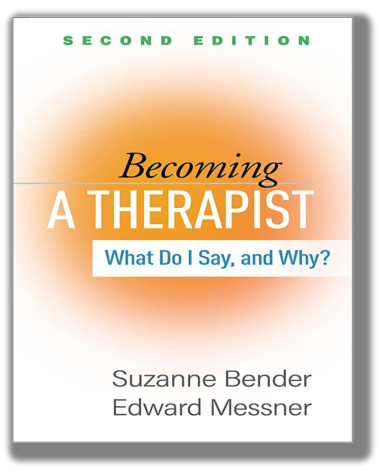
Revised and expanded for the digital age, this trusted guidebook and text helps novice psychotherapists of any orientation bridge the gap between coursework and clinical practice. It offers a window into what works and what doesn’t work in interactions with patients, the ins and outs of the therapeutic relationship, and how to manage common clinical dilemmas. Featuring rich case examples, the book speaks directly to the questions, concerns, and insecurities of novice clinicians. Reproducible forms to aid in treatment planning can be downloaded and printed in a convenient 8 1/2″ x 11″ size.
New to This Edition
*Reflects two decades of technological changes–covers how to develop email and texting policies, navigate social media, use electronic medical records, and optimize teletherapy.
*New chapters on professional development and on managing the impact of therapist life events (pregnancy and parental leave, vacations, medical issues).
*Instructive discussion of systemic racism, cultural humility, and implicit bias.
*Significantly revised chapter on substance use disorders, with a focus on motivational interviewing techniques.
*Reproducible/downloadable Therapist Tools.
The Oxfordian (verified owner) –
This thorough, compelling and entertaining book promises to become a classic in its field. The authors take the reader into the complex and fascinating terrain of the psychotherapist’s office, and, better yet, into the therapist’s head. The therapist-in-training learns how to talk and listen to patients, deal with problems as they arise, manage his/her own feelings dealing with a patients. This can also be a useful book for patients who want to understand psychotherapy from the other side. Written in clear, authoritative, precise prose, this book is accessible to all, sympathetic to both patients and therpists, and extremely informative. Not only will it be useful to therapists and patients, but would also be of interest to the mass market, especially Oprah! A must-buy for those interested in the therapeutic process.
JS (verified owner) –
Very good book focusing on detailed examples of what to say and why. The format is: Intro, examples (good and bad) regarding how to handle things as a therapist, and then follow up commentary. Easy and clear to read. (I am a new Psych grad student.)
Carolyn (verified owner) –
This book gives good dialogue type examples for many common situations encountered in therapy. There were many things one may not have even considered – like calling out the name of a client you’ve not yet met to identify them in the waiting room instead of announcing your presence so they can identify themselves to you. Who would have thought about preserving confidentiality in the way you first identify your new client? It makes sense, but it may not have occurred to you. The book is that way throughout. Lots of good sense, some concrete examples on implementing them, and situations you may not even have thought to ask about and how to handle them.
Ouzola Customer (verified owner) –
I teach undergraduates and now graduate students thinking about or facing their first therapy challenges. This book is an excellent resource when you go into a session armed with your theory and have no idea how to even start the conversation or get it where you need to go. It gives practical advice, very simplistic conversations, that are very comforting in the beginning of doing therapy. As a first-year student four years ago, this book would’ve helped me tremendously, so Im glad I can now use it with those who come after me in classes.
Veronica V (verified owner) –
This book is excellent!! if you want to be a therapist, this is a good choice to get started
littele fish (verified owner) –
I am reading the translated edition of this book, and I am about to start my couseling internship. I feel nervous and excited. Coincidently, I met this book and I found it was exactly written for us freshman learning to be a good conselor. The book offers many situations that might or must happen in the process of counseling. I gained a lot. Strongly recommend!
Hedwall (verified owner) –
Forced to read it for a class with my favorite professor. There’s a reason why she’s my favorite — this book tells it like it is, without all the filler. I am really liking it so far!
LaTania (verified owner) –
This is an awesome book. It provides detailed instructions on being a therapist, everything you need is right here. Great buy!
Enrique D. (verified owner) –
this helped me with my thesis, very easy to understand, obviously you need some sort of basic knowledge of psychology theory in your body….
Rachel Folger (verified owner) –
I thought that this book was an easy read an illustrated the many facets of counseling. I really enjoyed it.
AF (verified owner) –
Excellent book! I really enjoyed reading this book! Genuine and practical, it made it easier to start with my first therapy pt!
Shannon (verified owner) –
Very entertaining and educational booK. Would be especially helpful to new mental health providers. I found the author’s advice practical.
Mary Smith (verified owner) –
This book was a required textbook for one of my online Masters class. It give an excellent overview of the different lives of psychologists with their repsective credentials in varous areas of the field. It was an eye opener about the salary after completing a Master’s and starting out as a psychologist in whatever field one chooses to dedicate a life. A couple are from author’s who have reached or are almost near retirement. Those I found to be disheartening because I don’t have 30-40 years to be in the field and reach that level of salary in my lifetime.
I recommend this read for anyone contemplating a master’s and/or doctarate in Psychology. It will help you make a more informed decision about chosing to enter or not enter a post-degree program in psychology, or better chosing the unversity that will offer the degrees and courses you need to do what you want to do in the field of psychology.
L. Garber (verified owner) –
This book is a great addition to the beginner therapist’s courses. It’s incredibly useful.
Tami Ruckman (verified owner) –
Perfect!
Ouzola Customer (verified owner) –
This has been a great help to me!!
MLW (verified owner) –
This is a fantastic book for new therapists like myself. The authors’ knowledge on the subject seems very comprehensive and simultaneously makes the information accessible to a broad audience.
Nathalie (verified owner) –
This book is excellent! Great tips, very helpful.
Liz G. (verified owner) –
This book has been tremendously helpful to me as a clinical social work intern conducting therapy. When I first started working with clients, I felt my classes and foundation year internship had prepared me well to “do” engagement and establish a therapeutic alliance. However, in spite of having studied several interventions, I felt fairly clueless as to how to move from the initial sessions into ongoing therapy. This book was an important part of finding that missing link. I like the examples of dialogues, and particularly the sections on issues such as therapeutic impasses and empathic failures, that help guide my own practice in tricky situations. I recommend reading this book as you are getting your feet wet doing therapy. I am not sure it would have resonated as much with me, or made as much sense to me, if I had read it before starting to practice. In the end, what will make you (and me) a good therapist is, along with key attributes such as empathy and active listening, sitting in that chair hour after hour and doing it. In the beginning, though, books like this one are an invaluable bridge between utter beginner and seasoned professional. I am grateful to have found this book.
MegV (verified owner) –
This really helped me when I started my first job, even just as a mental health case manager providing intensive counseling services. It really helps you put into perspective what is most important – not necessarily what you say, but how you say it. There are also important ethical discussions in the book, which is always good. The discussion between both authors (beginner and advanced) is seamless.
Ouzola Customer (verified owner) –
This was assigned for my Masters in Mental Health Counseling program and again in my doctorate program. This book taught me so much to the counseling side of psychology. I enjoyed reading it multiple times. It’s perfect for budding psychologists!
Maria Astor (verified owner) –
Normally I am weary of reading books written by Psychiatrists because sometimes these books tend to be a little too technical. However, I have found this book to be quite practical with very good tips for how to approach a variety of clients and diverse psychological/psychiatric presentations.
Victoria Venturella (verified owner) –
This book is very helpful for a new therapist, it walks you through the beginning aspects of being with others in the therapeutic-client alliance. There are always things that go unsaid, this book helps to fill in those gaps in a way that speaks to the experience of a new therapist.
kbear (verified owner) –
Came in just as described. A great book with examples that a new counselor can follow easily.
jjzzcc (verified owner) –
I really enjoy the writing style of the author. She relates so well to her readers and is honest when she talks about herself and her experiences. I haven’t finished the book but the few chapters I have read were intriguing and helpful.
Anu Mathai (verified owner) –
Its a great text for beginners.
John Duffy (verified owner) –
Lots of good information
JR (verified owner) –
I really liked this book. I got it when I was feeling unprepared to start see psychotherapy patients during my psychiatry residency. This book was relevant, answered so many of my questions, provided example conversations, was easy to read and understand, and made me feel more confident going in to see my first patient. Before my first patients, I was spinning around in my head with a thousand “what ifs”, and I was so grateful to have help sorting through some of those contingencies that were not addressed in my classes. A year later, I still reference the book occasionally. When we started seeing our therapy patients a few weeks later, one of our highly respected faculty members actually recommended everyone in my class read this book as we were getting started! I recommend this book to anyone who wants help figuring out what in the world to do during those difficult situations that come up in therapy.
Katie Tribbett (verified owner) –
Wonderful book for new therapists! It has been an extremely helpful resource!
Alicia Powell (verified owner) –
Dr. Suzanne Bender has skillfully continued the vital work she began with the late Dr. Ed Messner by updating Becoming a Therapist, What Do I Say and Why? In this Second Edition Dr. Bender continues providing thoughtful, expert, practical advice in her warm and approachable style. The sections on the use of technology (texting, email, telemedicine visits) are alone worth the investment. The “Therapist Tool” templates provide specific language for common clinical situations, useful for therapists of all levels of training and experience. Thank you, Dr. Bender, for sharing your work with us all.
Robert Accordino (verified owner) –
Dr. Bender’s contribution, through this masterwork, fills a vital void both for trainees and those who teach them. Here, she expertly continues the work that she began alongside her beloved supervisor and teacher, the late Dr. Ed Messner by updating Becoming a Therapist, What Do I Say and Why? In this revised edition, Dr. Bender takes on topics facing the modern era of psychotherapeutic practice: email, text, social medial, telemedicine, and the electronic health record as well as issues of cultural humility, cultural identity, and antiracism in the context of patient care. This guidebook is essential not only for psychiatrists, but also psychologists, social workers and all stripes of therapists, both in training and with years of practice under their belts. Thank you, Dr. Bender, for taking the time to update and revise this extraordinary contribution to our profession.
Cordelia Ross (verified owner) –
Highly recommend this book to all therapists-in-training and those early in their careers. I received the first edition of the book as a trainee and referred to it regularly, dog-earring most pages. In this second edition, Dr. Bender provides thoughtful updates, including how to have important conversations about culture, identity, and systemic racism; navigating today’s double-edged technologies (email, texting, social media, telemedicine); and managing significant events in the therapist’s personal life (pregnancy, illness). Dr. Bender’s case-based vignettes are realistic and practical, and she provides nuggets of wisdom in her sample responses to potentially challenging situations: setting boundaries, discussing payment, navigating after-hours communications, etc. This book continued to serve as a helpful guide after I concluded my training and worked to open my own practice. I am very grateful to Drs. Bender and Messner for this tremendous resource!
Elizabeth Madva (verified owner) –
The first edition of this book was provided to me as part of my psychiatry residency training, and I benefited from it immensely – the guidelines and case-based examples were invaluable to me as I learned how to become a therapist. I was thrilled to review the updates to the second edition, including (but not limited to) considerations around the use of new forms of communication (e.g., social media, texting), how to talk to patients about systemic racism and consider our own unconscious biases, and how to navigate life events of the therapist (e.g., parental or medical leave) that may impact the therapeutic frame. I highly recommend this book to all – whether early in training or later in one’s career – as an invaluable resource!
Stanley Leiken (verified owner) –
The second edition adds even more wonderful topics. I particularly like how the book was written in the first person. It makes it comfortable and easy to read. I felt in the room with her as I was reading the book. Many of the topics are not generally written about by others. I feel that these topics in particular are especially well covered and useful for new and experienced therapists as well: When the therapist’s life interferes with the therapy, money matters, electronic devices, working with patients on zoom, pregnancy of the therapist, and ongoing leaves of absence for example during cancer treatment. The chapters on death and dying and termination are especially well covered and are very effective. I strongly recommend this book. Stanley Leiken, MD clinical professor of psychiatry UCLA School of medicine.