
Description
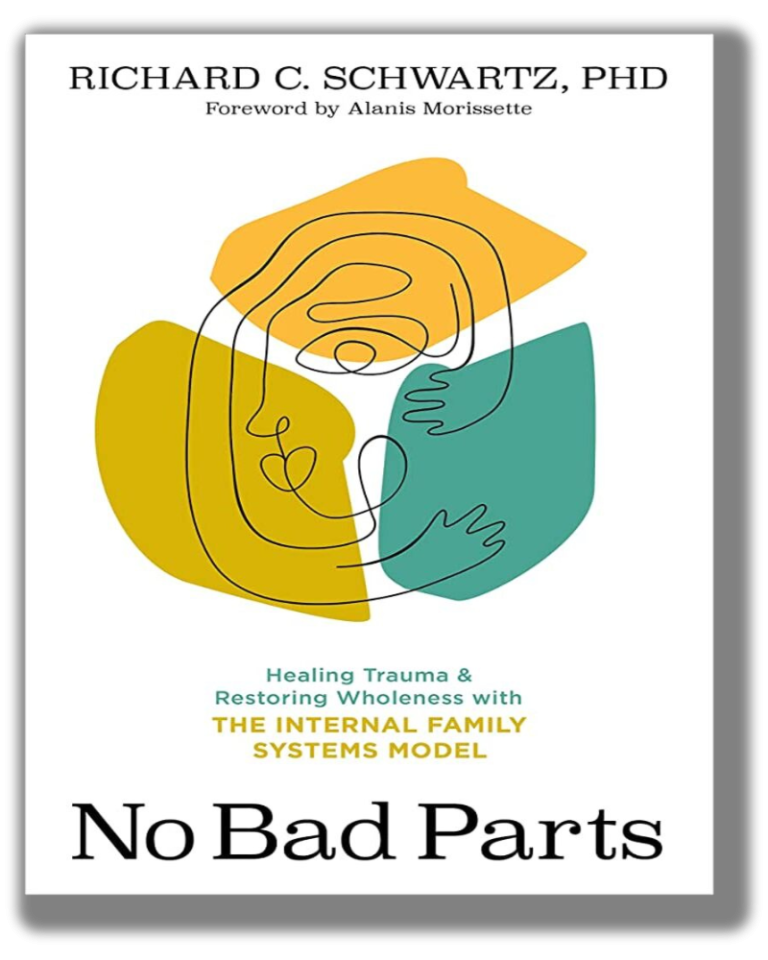
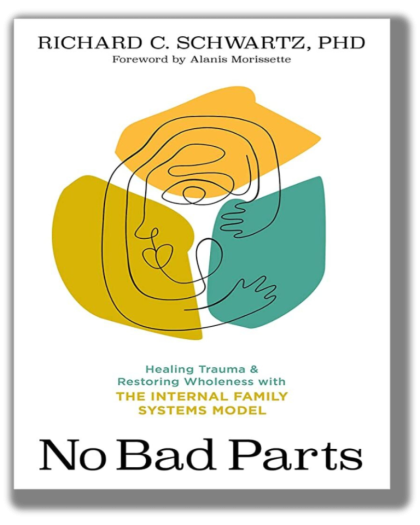
Discover an empowering new way of understanding your multifaceted mind―and healing the many parts that make you who you are.
Is there just one “you”? We’ve been taught to believe we have a single identity, and to feel fear or shame when we can’t control the inner voices that don’t match the ideal of who we think we should be. Yet Dr. Richard Schwartz’s research now challenges this “mono-mind” theory. “All of us are born with many sub-minds―or parts,” says Dr. Schwartz. “These parts are not imaginary or symbolic. They are individuals who exist as an internal family within us―and the key to health and happiness is to honor, understand, and love every part.”
Dr. Schwartz’s Internal Family Systems (IFS) model has been transforming psychology for decades. With No Bad Parts, you’ll learn why IFS has been so effective in areas such as trauma recovery, addiction therapy, and depression treatment―and how this new understanding of consciousness has the potential to radically change our lives. Here you’ll explore:
• The IFS revolution―how honoring and communicating with our parts changes our approach to mental wellness
• Overturning the cultural, scientific, and spiritual assumptions that reinforce an outdated mono-mind model
• The ego, the inner critic, the saboteur―making these often-maligned parts into powerful allies
• Burdens―why our parts become distorted and stuck in childhood traumas and cultural beliefs
• How IFS demonstrates human goodness by revealing that there are no bad parts
• The Self―discover your wise, compassionate essence of goodness that is the source of healing and harmony
• Exercises for mapping your parts, accessing the Self, working with a challenging protector, identifying each part’s triggers, and more
IFS is a paradigm-changing model because it gives us a powerful approach for healing ourselves, our culture, and our planet. As Dr. Schwartz teaches, “Our parts can sometimes be disruptive or harmful, but once they’re unburdened, they return to their essential goodness. When we learn to love all our parts, we can learn to love all people―and that will contribute to healing the world.”
Jor El (verified owner) –
Learning about and exploring my own “internal family” made a huge difference in my healing process moving forward with my life. I found the exercises and recommended suggestions to be powerful and transformative for me in the current life situation I am in. This book
by Richard Schwartz is written in a style that is warm, friendly, and informative for someone who is new to the process as well as someone who has already learned the basics.
LaffingKat (verified owner) –
Psychotherapist Dr. Richard Schwartz has spent decades developing his Internal Family Systems (IFS) model, which he elucidates in this book. This gentle therapeutic approach can heal past traumas and encourage compassion toward self and others. His explanations, and especially the transcripts he includes of five IFS therapy sessions, made it easy for me to understand his approach. I struggled to complete some of the 14 included exercises, but after reading this book, I feel encouraged to find an IFS practitioner to assist me with the process.
Conservatives may not appreciate when Schwartz gets political, particularly if they are Trump supporters. I don’t think this book was the best place to discuss some of Schwartz’s views, but I respect his desire to use the book to help create what he envisions as a better world. He has done a lot of work with social activists, and I think this approach could be very helpful for anyone with an activist bent. I was also intrigued with how IFS can be used in couples counseling.
Thanks to Sounds True for providing me with an unproofed ARC through NetGalley, which I volunteered to review.
Barbara Rogers (verified owner) –
“No Bad Parts” is a fascinating and inspiring book. Dick Schwartz shows how healing and liberating it can be to enter our inner world, and to lovingly care for the pain, the anguishes, and inner struggles that haunt us. He presents a captivating, groundbreaking, and deeply humane therapy approach. Internal Family Systems (IFS) therapy is not just a model of psychotherapy — it becomes a way of life.
In IFS, we become aware of our parts: those conflicting inner voices, feelings and beliefs that can overwhelm and confuse us. We also become aware of our Self: the healing force we all carry inside. These conversations, these compassionate inner exchanges, between our parts and our Self sustain and strengthen us throughout life’s challenges and changes.
His concept of the Self is revolutionary because he does not see it as broken, but as present in all of us. The Self becomes concealed by alienated parts, who are burdened with feelings and beliefs of traumatic experiences as they were fighting for our survival, most often during our childhood.
We learn about why parts are frozen in time, becoming stuck in feelings and beliefs formed by those traumatic experiences. We learn how we can help parts unburden and become supportive partners in our inner family. IFS is a healing journey that reaches beyond one’s own soul and life. It touches the lives of others.
It has always moved me how honestly and openly Dick Schwartz shares about himself, his own struggles, the history of his suffering parts, the development of IFS, and his experiences with IFS in his life. He does this again with his new book “No Bad Parts.” He is not someone who wants to be on a pedestal. He wants us to get to know what is going on in our inner world. He supports us lovingly in gaining appreciation for our parts and our Self — and in living Self-led lives. He empowers us to create harmony within and around us.
As his client some years ago, I had unforgettable experiences on this journey. I remember coming into a session after I had sent the final version of my essay “Facing a Wall of Silence” to the editors. As I listened inside, I did not notice any parts. Instead I had a strong feeling of being alive. He asked me to imagine walking up a path and leaving my parts behind. When I did this, the feeling of being alive only intensified. He invited me to ask this feeling what it had to tell me, and the first thing I heard was: “This is what you are here for.” The same feeling returned strongly and for some time, years later, when I wrote “Alice Miller: War and Betrayal Trauma.”
Although I have a part who is very skeptical of spirituality, it acknowledges these experiences as real, valid and convincing. In retrospect, it seems that — without being aware of it — I was on a journey and had a calling, which IFS helped me fulfill.
It is a profound relief not to be demeaned by some arbitrary diagnosis, but to understand how our history impacted our parts — and forced our Self into being locked away. It is deeply gratifying to come to value our Self and to live with Self-leadership.
The experience that my Self can be there, reliably and lovingly, with compassion, for my parts when they come up, and struggle, and need to share, has been life-changing. It has brought hope and joy and love and courage into my life.
Dick Schwartz shares his insights and experiences bravely and honestly. The wealth of those experiences and insights is comforting and invigorating. And comforting and loving is the IFS therapy approach, which is a blessing as we can actively heal our traumatized parts, harmonize our inner system, come to cherish our parts’ true essence, as well as our Self — and find our place in the world.
I am grateful for my IFS journey, for Dick’s open heart and generosity when confronted with my vehement protectors, and for the encouragement that his book “No Bad Parts” provides in continuing my journey with IFS.
Richard E Neslund (verified owner) –
If you’ve ever had any disproportionate reactions to situations (situations that had no impact on you), if you’ve ever felt strong emotions toward someone (and didn’t know what prompted the emotions), if you’ve ever felt severely critical of yourself (even after you’ve done your best), then you’ve experienced aspects of your internal family system of ‘parts’.
Richard Schwartz, in “Internal Family Systems Therapy” and “No Bad Parts”, introduces a comprehensible topography of our inner psyches (including both our constructively productive and also our disruptively less-than-productive ‘parts’). IFST is a very practical process for “healing our trauma” and “restoring our wholeness.” In contrast to many other therapies (that confront our experienced challenges as pathologies), IFST emphasizes how “all” of our parts have helpful intentions … even those ‘parts’ that may be currently mis-guided.
Schwartz presents the IFST theory and therapy in layman’s language and applies it to everyday situations with which most of us can readily identify. Even we non-therapists can understand and appreciate the IFST model and practical applications. Whether you’re a relatively functional individual who effectively manages your inner ‘burdens’ or an individual often overcome by apparently uncontrollable ‘burdens’, Schwartz’s IFST can be helpful for you.
Strongly recommended for individuals journeying toward finding and feeling their greater wholeness!
Five Stars.
Rosie (verified owner) –
I was introduced to IFS by my therapist and I feel I owe my life to it since I was suicidal beforehand. This book will change the lives of many in the same way. My only criticism I have is that the author’s political views leaked through, and for that reason if I have not had the life transforming firsthand experience with IFS I wouldn’t have continued reading it. I think most of the references that I thought were critical of my political beliefs were spot on, but specific references to Donald Trump personally I did not appreciate, but it also intrigued me to explore my reaction to it to try to better understand myself and others. So definitely worth any discomfort I experienced when reading those references and it made me consider that all people’s political views are valid!
Nikki (verified owner) –
I love the concept of IFS and I really enjoy Schwartz’ perspective and I was very excited about a book with a kinder view towards parts. I felt like most of the book is about how amazing things are when you are in “Self” but doesn’t really focus on the path to get there nor the pitfalls and general struggles that get in the way. The reason this is kinda frustrating is because Schwartz has been very clear that once you are in “Self” you will often have more access to self leadership and how to take care of yourself on your own. He specifically gives examples of people who already have access to “Self” so there’s not a lot of help for those who aren’t accessing that state easily, which I imagine are the people that are reading the book. Maybe it’s just me and I struggle to access “Self” but the exercises pretty much assume you are accessing it and don’t really talk about what to do if you aren’t so it felt pretty discouraging to read!
It’s still worth reading if you are interested in IFS! This is just my personal experience with the book!
kidsmoked (verified owner) –
I think I’d have preferred to wait for its release on audible for the meditations. I’ll probably buy that and the print. Thanks Dick – much appreciated. 🌺
Mrs P Dawson (verified owner) –
Clear introduction to the idea that we have parts of self . To me the book takes you through the process, there are useful exercises to follow, though I think best explored with a family systems therapist. However, I found a useful addition to psychotherapy sessions, and a good way to think about me for the future. There’s some really good points in the book – self as a wider field; physical issues as a manifestation of parts of self; trauma pushes us out of self; parts overwhelm us until we no longer fear them.
suki (verified owner) –
I’ve been doing IFS work casually for a couple of years, but I’ve just gotten more seriously involved with a formal application of the modality, and this is a spectacular book. I’ve been in psychotherapy for over 40 years, and this feels like for the first time something can help me, where other modalities don’t even scratch the surface. I also think that this therapeutic method should be used in conjunction with plant medicines. I’ve never read a book where I’ve highlighted so much because the conciseness and succinctness of every single chapter is condensed into only the salient points. I find it to be one of the most well written books that I’ve ever read!!
Tegan D’Arcy (verified owner) –
I had intuitively managed to do intense parts work on myself previously without realising this modality actually already existed, before stumbling on a counsellor/hypnotist that uses this work & pointed me in this direction.
Richard; while not documenting the professional process exactly for a practitioner – has included plenty of exercises to do on yourself & provided transcribed sessions which are moving & fascinating. As well as giving you a solid foundation on the what Internal Family Systems actually is.
While it can sound a little out there to the uninitiated, go in with an open mind and willing to try things out & you might be surprised. Though I do think doing the exercises on yourself would be harder than them being facilitated for you if your not the type prone to introspection and/or meditation.
But this is an amazing, paradigm shifting system he has worked hard to develop for the betterment of society and look forward to it becoming a more mainstream approach in the future.
Prescott (verified owner) –
This is the 4th book by DS that I’ve read. I believe IFS is “the way”, and hope everyone tries it, and heals with it.
Dr Schwartz: you’re proud of your scientific and curious approach to the inner world, and you should be. You are a good scientist there indeed.
Perhaps you should stay curious about political issues too. Or at least stay mum about them as a strategy for reaching people. The portion of your audience who already swallow the CNN talking points don’t need more convincing. Why alienate those who don’t?
I’ve watched just about every youtube video of yours. I bet in more than half of them you give us your drive-by diagnosis of Trump. Why? Is your mission to convert conservatives, or is it to help people understand their inner worlds? If you really need a punching bag to make a point, why not Hitler?
Stay curious about your political axioms, please.
“the racism of western whites…” … because the east and other cultures are free of it?
“the patriarchy…” … because there aren’t fields where women dominate?
“the evils of capitalism…” … because theres an economic system where everyone wins?
“we have a mindset of unlimited growth…” … I am not my country. Don’t tell me how I think.
You rightfully criticize the diagnosing done by the DSM. Stop diagnosing people based on who they vote for.
Alyson W. (verified owner) –
This book is mostly for people who have never heard of parts work or have curiosity to learn about it. I’ll say, the first half of this book is amazing. You have to approach the concept if it’s new to you with an open mind or you may find yourself feeling cynical. I felt cynical at first and then I started doing the exercises. I was able to identify 3 “parts” of myself that I tend to repress or ostracize/cast away. I’ve improved my relationship with myself and others through identifying them and “hearing them out” when they are reactionary. The second half goes downhill a little bit, in that it gets a bit too spiritual and religiously influenced for me, and a little hippy dippy, but that’s okay, because the first half is all that’s truly necessary.
J. Maxwell (verified owner) –
Internal Family Systems or simply “IFS” is one of the most cutting-edge therapies in the mental health world. Therapists have waited years in getting trained in the model because training classes are so in demand.
IFS proposes that your mind is made up of multiple “parts” and the best way to heal your mental and emotional wounds is to develop a relationship with yourself, almost like a parent would with a child.
This therapy can be a bit much for some folks, but it’s definitely worth a try!
Tim B (verified owner) –
4 stars because i just started. I never write reviews but I truly feel this is going to be life changing for me. I am only 15 pages in so I will update later.
C. Donaldson (verified owner) –
The more we know about the mind/body connection, the better chance we have to heal. The more we know about the effects of overwhelming the nervous system in childhood, the better chance we have to heal as adults.
No Bad Parts describes healing with these concepts in the foreground. Internal Family Systems (IFS) is a paradigm-shifting and game-changing therapy. And it’s founder explains IFS with clarity and respect for the reader.
If you’re tired of the same old approach to talk therapy and mindfulness, give this book a try. It’s been life changing for me. (And I’ve already ordered 3 more copies for friends.)
CB (verified owner) –
Schwartz never considers people like me who don’t have many memories of our youth. I can’t say much about my life before like fifteen, and even then, my memories after fourteen fade more each year. It never even crosses his mind. Ever. He thinks all problems are from childhood episodic scenes every single person remembers crystal clear. Never mind people whose lives got screwed up after childhood only. Never mind traumatic brain injury that can limit “access to the Self” forever. We all have the same mental capacities to do exactly as he says!!11
I also question his judgmentalness against extremity – you cannot expect to be able to convince every bigot, oppressor, or abuser to get enlightened LOL. Calmness is a value, yet effective mobilization of extreme emotion isn’t.
That being said, this is better than cognitive behavior therapy by a longshot.
PProf (verified owner) –
Just like in title. It’s a different approach to therapy and healing– instead of digging deep, dig wide and broad. We have a lot of answers for ourselves . We are almost as different from ourselves day to day as we are from others around us.
Ouzola Customer (verified owner) –
This book helped me understand just how much our world needs to heal from the various traumas that impact it on every scale (individual-societal). This book cohesively communicates the IFS worldview in a very simple and relatable way. I loved it!
TerryAnn (verified owner) –
For those of you that are into IFS, this is another book in the series on how to further your clients knowledge as well as your own. Well written with a lot of practical examples. Sometimes, ( as Dick want to do) He does make very bold statements on the power of IFS and you may have to work that back with your clients – other than that it’s a great foundation book.
Bronx Book Nerd (verified owner) –
This book attempts to popularize a very powerful therapy but muddies the waters by jumping into the ideological fray, which is a great shame because that angle will turn off readers and impose upon them an obligation for which they did not come. Internal Family Systems therapy, developed by the author, claims that we all have different “parts” within us that play different roles in our lives – there are the “exiles”, or part that is kept hidden, like a scared little boy who may have been shamed for expressing anger, the “protectors,” who protect the exiles, by, for example, creating a persona of a tough guy, and there are the “firefighters,” who come into play when things look like they will get out of hand and take the person to a whole other reality, through drinking, drugs or promiscuity, for example. All these parts are real and require attention and convincing that the adult you can handle life, because they think you are still a child. You speak with them and ask them what role they play, when they start backing off they can then re-emerge in a more useful role, like health assertiveness instead of tough guy, for example. All of this makes sense and has been beneficial to me as I engage with my parts and have already gained from this process. The problem is that the author takes this therapy, which should be timeless, and associates it with things like the green movement and generally liberal ideologies. Someone in psychological distress is seeking relief in the here and now for what ails him or her, not to join a larger kumbaya movement that fixes all of the world’s ills, and Schwartz starts to place this heavy burden on the reader. Perhaps not what he intended, but it leaves a reader with unnecessary material to read as well. This is unfortunate because the incredibly powerful therapy will get lost in the ideological casting.
Sky Clark (verified owner) –
I am only one chapter in, but that’s enough to see that this book will be life changing. I am immediately won over by the author’s point of view and masterful work as a therapist. I can identify with what he is teaching wholeheartedly. After reading and doing the first two exercises I already feel myself more able to understand and regulate some very coplex emotions. This book is about understanding how the different parts that make up your personality all have merit. It makes it easier to understand what is at the root of your knee-jerk reactions and know yourself more fully. It has already been a great help in my lear
Ouzola Customer (verified owner) –
This should be required reading for every human being. I usually only leave a review when I feel compelled to and I feel compelled to encourage anyone and everyone to read this book and put to work what you discover.
Ouzola Customer (verified owner) –
Really enjoyed this analysis of the various parts and how we can learn from our protectors and exiles especially. I am already taking new and healthier cues.
Leah Noumoff (verified owner) –
Pretty much every human being needs to read this book, internalize and act on its message. Go. Now. Read. All of it! Also saying this as someone who has been through the IFS therapy model with my own therapist. The world needs this level of healing.
Kenneth Good (verified owner) –
Good. sad it’s a little libbed-out and political. But overall I’m open minded and working with IFS right now. The system is sound. It’s too bad worldviews have to be involved with everything now.
JEN (verified owner) –
This book is one of my many favorites books. Love to read that all parts of you are not bad. Wonderful read for trauma, anxiety, depression, and the study of the self. Give it a try! 😊
Kristine H (verified owner) –
I’m relatively new to the idea of IFS and this is the first book I’ve read on the subject. It’s been absolutely life changing for me, no exaggeration. Learning to engage with my “parts” has given me much more freedom and capacity. Super insightful and helpful.
Adamsong21 (verified owner) –
I’ve read this and worked with IFS on my own the past 4 weeks. I’ve had more shifts and self connection in the past 4 weeks than the last 2 years.
This is an easy read too. It’s not like a psychology textbook or anything. It is the spiritual side of it and that resonated with me clearly. Thank you for this Dr. Schwartz!
Darby (verified owner) –
I agree with other reviewers that this book is life changing. So many therapists and self-help gurus today are great at diagnosing problems, but this is honestly the first book that has offered me real solutions. I am very excited about this journey.
Javen Michael Bear (verified owner) –
I found this book a really helpful intro to internal family systems, and I would recommend it.
Elisa (verified owner) –
I really enjoyed that this book gave a good conceptual understanding of IFS, while also providing examples for practical use and application with clients. In depth, but not too complex so that this would be helpful to those in various levels of practice.
Jane Austen (verified owner) –
It’s relatively easy to read, but I personally only read a few pages at a time. That helps me to absorb. I have already had IFS therapy and will never go back to typical talk therapy. IFS is a structured way to process the many layers, or parts, that make us who we are.
David Lawson (verified owner) –
Good book. Really gets into IFS in a clear way. A great book to start with. I only gave it four stars because it gets a little political at the end. Is it just me or are some authors taking liberties to express their political views in their books? This is the second one I read where they get their political points in. It is self help so I would much rather concentrate on that than their political agenda. Otherwise a great book. Do not let my 4 stars stop you from buying this book because it really is a valuable place to start when it comes to the internal family system. Highly recommended.
Kim S. (verified owner) –
I listened to this on Audible, but also have the book. This is such a great intro to part works and so inspiring. I have found this type of therapy so relatable and helpful to me. I know it’s cliche to say, but it really has changed my life.
The radical assertion in this book is that we don’t have just one mind, but many minds. And that doesn’t mean we have multiple personality disorder. We have many parts to us, and these parts each have their own minds too. This is why it is so easy to think in two opposing ways at any given time.
These various parts were created through our childhoods and sometimes adulthoods to protect ourselves and as ways of adapting to various difficult situations. The problem is that since these parts were created in us while we were young, they are stuck in some old assumptions and patterns that are no longer helpful and sometimes harmful in our adult lives.
If you grew up with abuse and/or trauma, these parts can be particularly deep down and harmful, blocking your true self. Healing these parts lessens your burdens and sets yourself free to live your life authentically. This work is not easy, but so worthwhile….
Schwartz’s main purpose of this book is to show how through parts work you develop self connection that translates into greater connection with others and even to the world itself.
Kristen (verified owner) –
My therapist recommended this book when I told her I struggled with turning inward, being more in my body, negative self talk, and focusing too much on the exterior parts of life. Definitely not a book to sit and read all at once. Had to do some discussion with my therapist and therapists at work to truly understand the concepts (it’s not multiple personalities or dissociative identity disorder!) Wasn’t a fan of some of the very liberal mindset but it can be easily brushed off. Curious to see where this goes and how to implement this into my therapy sessions and life.
Imani (verified owner) –
Love the book! It can be complicated and sometimes you get lost in the words. I found myself having to reread to get a full understanding. The book is great! It provided me so much knowledge about myself and my clients. It provides practical application for clinicians. I recommend !
Tracey O’Connell (verified owner) –
I absolutely love this book and IFS. After decades of “traditional” therapy, I see IFS as the key to unlocking human suffering and being able to really let go and move forward after traumatic or other significant emotional experiences.
Robin Fulcher (verified owner) –
I recently read “No Bad Parts” by Richard Schwartz which was a thought-provoking and mind-altering experience in the best way possible. This book delves into the concept of internal family systems, and the idea that every individual is made up of multiple parts, some of which can cause us harm or hold us back.
Schwartz’s writing style is easy to follow and understand, yet powerful in its impact. The book challenged me to think about my own internal parts and how they interact with one another, and offered practical tools to work towards inner healing and growth.
I highly recommend this book to anyone who is looking for a new perspective on self-improvement and personal growth. It truly had a positive impact on my mind and has given me a new outlook on how to approach my own internal struggles.
Serenity (verified owner) –
This is a fantastic book, and I had no idea how helpful and insightful it would be. I have been searching for the way to move through trauma and I finally feel like I have a full picture of how I can make that happen after finishing this book. Thank you.
Courtney F (verified owner) –
Perfect for any trauma sufferer
Aimee Butler (verified owner) –
This book is easy to read, and eye-opening… Explains a simple powerful model that makes perfect sense. I made my husband read it!
One Helluva Nice Guy (verified owner) –
Very useful material presented in an easy to readform
Andrea L. Stoeckel (verified owner) –
This will be new information for me. It was suggested by my therapist
Amy Yanner (verified owner) –
Everyone should read this book if they are having trouble with past events in their lives. It explains things in a way everyone can understand and you don’t need a PHD to really get what the author is trying to say.
Catherine (verified owner) –
Especially post pandemic when so many are feeling the impacts of strong or extended emotional states, this work is huge. I really appreciate that it focuses on reframing our internal parts in a constructive way (that they are all trying to support us at their core, even when the messages get extreme) and how to work with them vs against them to be more our truest selves. Using these principles in conjunction with EMDR, I have had a host of fight-flight-freeze linked physical symptoms start to lessen and in some cases disappear (ie chronic back pain for 15 years, lymph node swelling, light sensitivity and headaches). I absolutely recommend reading, for a deeper understanding of ourselves and others, and the goodness at our core.
Amanda Prattt (verified owner) –
Great book!
Aistė (verified owner) –
I lived this book. I’d recommend reading it for everyone. Nice introduction to internal family systems with several practical exercises.
rsantalo (verified owner) –
I’ve waited 6 weeks (after completing) to write this review. As someone who has done a plethora of retreats, workshops and meditations, I can honestly say this is the most powerful work I’ve ever experienced. It seems unbelievable that a book could have caused such a great shift but … I’ve lost 30 pounds, I’m enjoying daily workouts, I’m learning 2 new languages! I have ideas pop up regularly that I think “where did that come from!??”
I cannot thank the author enough for his hard work and dedication. I wholeheartedly recommend this book if you are looking for peace and untapped creativity.
Jed J Bendix (verified owner) –
Over the last two months, many times, I have tuned into and explored my internal family system, which has resulted in many fascinating conversations. After these
conversations, I experienced a sense of
well-being.
Pamela Olson (verified owner) –
I’ve been undertaking a “Year of Growth” since I hit age 42 and realized I still have a ways to go to really grow up. Out of many, many things I’ve tried, this book made the biggest difference in my life in the shortest time. It’s not just a “therapy modality.” It’s a way of viewing human nature that is fundamentally kind and hopeful. And it’s a way of actually healing trauma breathtakingly quickly, not talking about it endlessly for months and years, and not just trying to keep a lid on it with top-down approaches.
You can make friends with even the most challenging parts of yourself. It’s literally all good. Some old programs just need a little love and a little updating. IFS provides a genius “hack” for doing exactly that.
You don’t need willpower to change your life when you’re actually healed. Life naturally and easily gets better. I barely recognize myself from three months ago when I first read this book. (I just listened to it a second time, and got a lot more out of it after doing many IFS sessions on myself for several weeks.)
I could go on and on, but I’ll just say this: If you’re human, read this book. I understand so much more about everything since reading it, and life has gotten much better.
It’s not an immediate cure-all, and it requires tough inner work. There are other methods and modalities that have shed other kinds of light, and I’m grateful for all of it. But this helped me take a huge psychological and spiritual step forward. And it doesn’t require you to believe anything. When you access your Self, you know. And it feels like a homecoming to a strange new world.
With books like this showing new-old ways to find our best natures, it feels like a wonderful time to be alive. And I’ve seen some of the worst of what’s happening these days. I don’t come by my cautious and increasingly joyful optimism lightly or easily. Even if we destroy ourselves, it’s fascinating and wondrous having a chance to find ourselves and each other in whatever time we have.
P.S. This book works particularly well as an audiobook so you can do the exercises without having to refer to the text.
Karen (verified owner) –
Since my teen and early twenties I have been off and on in therapy and learning different healing modalities, and spiritual practices and this book integrates what I have learned and practiced and is definitely the best integration of psychology and spirituality I have found. Spiritual practices can tend to contribute to ‘spiritual bypass’ this book is not that. IFS and this book truly are about learning to love and accept yourself as you are where you are!
Elizabeth A. Myers (verified owner) –
Incredible healing
Ouzola Customer (verified owner) –
If you take a deep look into the wisdom Richard Schwartz shares your life will never be the same. His profound discovery of IFS has change the way I view life and in turn guided me to be a more compassionate person, mom, sister, partner, daughter, and human.I cannot say enough good things about this book.If you’ve been on your healing journey a while and are still overreacting and struggle to understand the core of it. This book will guide you to understand how the parts of you are protecting you and allow you to feel compassion for yourself and others.
Johann (verified owner) –
Good little read. Priceless information