
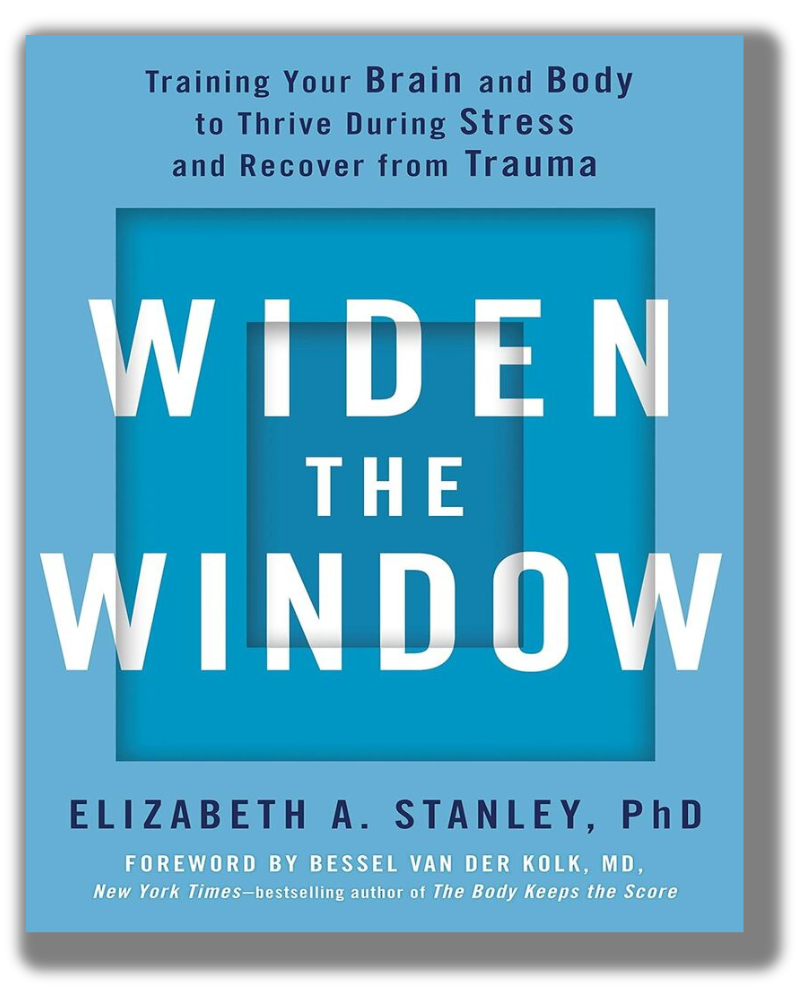
Description
“I don’t think I’ve ever read a book that paints such a complex and accurate landscape of what it is like to live with the legacy of trauma as this book does, while offering a comprehensive approach to healing.”
–from the foreword by Bessel van der Kolk
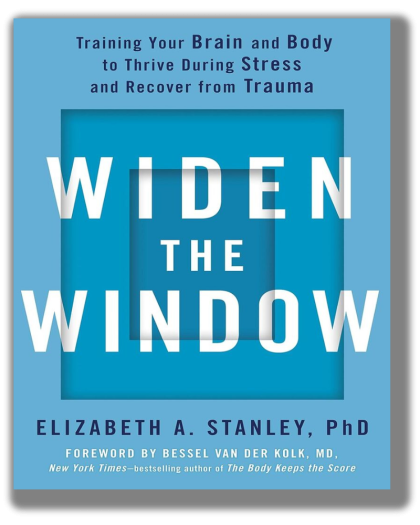
A pioneering researcher gives us a new understanding of stress and trauma, as well as the tools to heal and thrive
Stress is our internal response to an experience that our brain perceives as threatening or challenging. Trauma is our response to an experience in which we feel powerless or lacking agency. Until now, researchers have treated these conditions as different, but they actually lie along a continuum. Dr. Elizabeth Stanley explains the significance of this continuum, how it affects our resilience in the face of challenge, and why an event that’s stressful for one person can be traumatizing for another.
This groundbreaking book examines the cultural norms that impede resilience in America, especially our collective tendency to disconnect stress from its potentially extreme consequences and override our need to recover. It explains the science of how to direct our attention to perform under stress and recover from trauma.
With training, we can access agency, even in extreme-stress environments. In fact, any maladaptive behavior or response conditioned through stress or trauma can, with intentionality and understanding, be reconditioned and healed. The key is to use strategies that access not just the thinking brain but also the survival brain.
By directing our attention in particular ways, we can widen the window within which our thinking brain and survival brain work together cooperatively. When we use awareness to regulate our biology this way, we can access our best, uniquely human qualities: our compassion, courage, curiosity, creativity, and connection with others. By building our resilience, we can train ourselves to make wise decisions and access choice–even during times of incredible stress, uncertainty, and change.
With stories from men and women Dr. Stanley has trained in settings as varied as military bases, healthcare facilities, and Capitol Hill, as well as her own striking experiences with stress and trauma, she gives readers hands-on strategies they can use themselves, whether they want to perform under pressure or heal from traumatic experience, while at the same time pointing our understanding in a new direction.
Tammy (verified owner) –
If many in our society would read this book, not only would the individual reader be better off, but the whole world. Stanley uses her own experience with stress and trauma to create a training regimen for people to re-regulate themselves even in toxic environments. The “window” Stanley refers to is our window of tolerance to stress arousal, which is unique to each of us and adversely affected by chronic stress and trauma without enough recovery. If we get help at all, we focus on thinking brain approaches – talk therapy and the like. But these approaches fail because stress and trauma are not controlled by the thinking brain, but the survival brain. So we need “bottom-up” approaches. Stanley’s book has three parts. The first part explains the culture that leads us to just push through stressful situations with our thinking brain, which ultimately makes us quite literally sick. The second part goes into the science behind why we need to involve the survival brain and body in reregulating our systems (think of it as a computer reboot). And the third part explores various training programs that will help you widen your window. This book is not just for trauma survivors but anyone who wants to learn how to live a fuller, more integrated life in this stressful world. The great part is that Stanley intersperses stories throughout the book so that it is an easy read. Highly recommended.
Greifvogel (verified owner) –
I use these concepts every day now, and I can’t stop telling everyone I meet how much more fulfilled and less stressful their lives would be if they would just learn these lessons. Must read!
Alexandra (verified owner) –
I stumbled upon this while dealing with the cleanup of being bedridden for two years with Lyme disease. This should be mandatory reading for anyone who tried to stuff down trauma via chasing accolades and anyone dealing with Lyme/chronic illness. When she listed her symptoms I was screaming to myself that it had to be Lyme, but expected her to never list a diagnosis and mention a clear misdiagnosis. But no- she has Lyme too! I will be sharing with all my Lyme friends!!! Thank you for writing and being so open!
Elizabeth Grimm (verified owner) –
This book uses the lens of personal memoir and healing to teach the reader key concepts around neuroscience, international relations, and mind-fitness. I cannot imagine a more important read for our particular political moment. I recommend it for everyone who has worn invulnerability as a badge.
David from Washington (verified owner) –
This is a great book. Dr. Stanley’s book is very helpful. Her research and analysis into stress, trauma and anxiety and their impact is a powerful, personal, self-reflective discussion of how we can live more healthy and whole lives. I found her discussions of mind fitness training, of how men and women process stress, of how we set boundaries and limits and how we built our “reserves” (i love that military metaphor) insightful. She has practical tips for how to improve one’s life.
Irene S. Wu (verified owner) –
While stress-coping books are commonplace, Dr. Stanley’s differs by identifying how much of what we call stress – which can be either good or bad– is actually trauma – which is incontrovertibly damaging. Further, she argues that the norms of American society actually promote trauma as normal and necessary for achievement. For America’s military, trauma is built into warrior training, but how to cope with it is not. In her book she shows how these professional and cultural expectations inflict personal pain, how the resulting individual damage converts to collective trauma, narrowing our window to manage and solve society’s problems. However, it can change, and Dr. Stanley calls for it, one person at time.
Heather Hart<span class="a-icon a-profile-verified-badge"><span class="a-profile-verified-text"></span></span> (verified owner) –
This book is excellent for anyone dealing with unresolved stress and trauma, which I imagine is most people in some capacity. It is easy to read, although breaks down the detailed science behind how our brains process stress and trauma so that it is fully understood before the exercises are started. This is exactly the book I was looking for to deal with both my chronic stress and childhood traumas, both of which have been debilitating as I navigate motherhood with two babies. I now understand how much these things have actually affected my day to day life and relationships with family and my kids. I am already healing and I’m looking forward to getting even better as I continue to work through everything. Thank you thank you thank you to the author. You have changed my life.
Donna R. (verified owner) –
Amazing book. Very easy to read and understand the complex mind body system. everything discussed is supported by science.
Db (verified owner) –
Go for it – read it
Mayra N. Montrose (verified owner) –
Widen the window by Elizabeth Stanley is a wonderful book in three parts. Dr. Stanley draws from her personal experience as a teacher, soldier, and woman, as well as the experiences of professional soldiers, first responders and daily-life warriors to explain to us how our backgrounds, childhood, and choices frame our resiliency in day to day responses to stressors. The best thing about this book is that, while it is based on training for soldiers and first responders to improve their response in their very stressful situations, the techniques it shares can be applied to anyone under any circumstance.
The first part of the book describes its premise: how our modern lives expose us to stress and trauma and how our bodies and minds automatically react to this. Dr. Stanley also defines the two sides of the same coin that lead to lifelong dysfunction: trauma, in which we feel helpless, and stress, in which we have more control. One need not have experienced “profound” trauma or profound stress to have dysfunction. That is the point! We are shaped by our personal “windows” of resiliency. Some of us may seemingly tolerate more than others, but that does not mean that we have not all been affected in some way.
The second part of this book is fascinating. It delves deep into the science of stress and trauma. It relates how our windows may actually be pre-determined by the windows of our parents and ancestors before we are even conceived. It was this part that raised my awareness of how I personally react to stress and trauma that I can link directly to my parents’ reaction to the same. it also made me think of how I have affected my own children’s reactions. Now that I’m more aware I have modified how I model myself. Highly scientific and detailed, this section is essential reading that prepares us to tackle section 3, when we get to practice on ourselves.
The third part of this book is Dr. Stanley‘s gift to humanity. This part describes the processes by which we can heal ourselves and thereby become better equipped to handle day-to-day experiences that may have otherwise given us stress for days, months, years. The techniques require commitment and it helps to think of them as training for our mind and spirit, just as we would train for anything else in life!
In addition to exercise to expand our windows, thereby modifying how we react to stressors, Dr. Stanley provides excellent examples and ideas for improving our lives in general. Sound body and sound mind, how to organize ourselves to pre empt our natural Reactions to stress, and how to help our communities heal, one person at a time. We can only be responsible for the things we can affect, but those situations, which will generally include other individuals can be handled with. More grace and resiliency then we may presently be aware of.
Dr. Stanley’s advice for personal healing, based on sound research and tested processes, in addition to her vision for a more harmonious world are inspirational. I am ready to be a better person, citizen, Parent, colleague, and friend. I look forward to using these techniques for the rest of my life.
JM (verified owner) –
This book has opened my eyes in so many way! It has made me believe that I can make changes in the way I process trauma and stress. It has also showed me that the way I am, is not totally my fault…which has helped me be more open to getting help. Thank you so much for writing this book, Elizabeth.
LB (verified owner) –
I found this a valuable resource for understanding how trauma, and even everyday stresses, affect the body. The introductory chapter was enthralling and after reading it, I expected to go through this book really quickly. The heavier content wasn’t the only thing that kept that from happening. You can tell the author is a dissertation writer. The book reads like an academic paper—very in-depth, loaded with data, and at times repetitive. Literally, 40% of the book is the reference list/notes and index. Still, the exercises make it well worth going through. I don’t agree with the reviewer who says the book is too political. I didn’t notice anything inappropriate and it is pretty data-driven writing. I would highly recommend it for anyone affected by trauma or working with those who are. I’m glad I stuck with it.
Maxi (verified owner) –
I have read MANY books on mindfulness and of all this is the best so far. Resisted it for a long time because I am not a veteran, but if you have a Trauma history of any description, READ IT!
Best info for getting me out of amygdala hijack, best excerises that really do work and are so simple, for increasing my stress tolerance. Cant thank Dr Stanley enough, and Ill be at that MMFT online course as soon as it goes live!
Myra in Carmel, CA (verified owner) –
This is the best book on trauma I have ever read—and I have read a lot of them! This author is incredibly clear and comprehensive. It’s a treasure trove of knowledge and advice that can help anyone, applicable for dealing with anything from job stress to catastrophes. I have already recommended this book to countless people. It’a a gift to the world!
Susan (verified owner) –
She knows her stuff. Most of the research was done with Marines. PTSD sufferer, myself. Got an opportunity as Covid ER nurse to try the eight week course online free. Challenging but effective. The book is not the course. The book is the research.
Adina Silvestri (verified owner) –
As an addictions Therapist who studies shame for a living, I found Liz Stanley’s book to be riveting. A must read for anyone who feels like opening the “Pandora’s box of emotions” is too hard and coping skills seem to “not be working.” Liz synthesizes the material in a way that’s easy to digest. The personal stories that are interwoven into the science on trauma is icing on the cake! She opens the book with an unbelievable personal story!
Nicola (verified owner) –
As a therapist and someone who, like the author, has spent decades overriding her body’s needs, Widen The Window has provided me with a nonjudgemental way to understand how stress and trauma has impacted my mental and and physical wellbeing as well as offering practical tools to begin true healing. I would recommend this to anyone who doesn’t resonate with top-down therapies like CBT and is open to making time for stress recovery in their daily life.
Tara (verified owner) –
Very helpful ideas
Bonnie (verified owner) –
I am a Christian and believe that Jesus and science aren’t mutually exclusive and that He can use everything in a person’s life to speak His truth and life, even if it’s not something that has a “Christian seal of approval” on it. This book has been helpful by giving some words and expressions to both the experiences and the resulting mental and physical symptoms I’ve had. There is a little bit of repetitiveness in it and also some neurological terminology, but overall she explains those aspects well and doesn’t get too far into the medical/psychological rhetoric. (I would give it 4.5 stars if I could but went with 5 stars because I realize that I’ve heard and read some of this information which may have made it a little easier for me to read through compared to someone reading it without having heard some of this before and needing the repetition.)
The author gives both scientific evidence from studies and also cites experiences from her own life and from the lives of those with whom she has worked. In addition, she addresses how some popular therapies for dealing with stress and trauma and some celebrated skills in the workforce (multi-tasking, pushing through the pain, etc.) actually end up deepening and worsening the preexisting brain dysregulation. She discusses the importance of having “domain-general” learning and training instead of “domain-specific” learning and training. As the different words imply, the domain-general learning and training can be used in general (more broad) settings compared to domain-specific learning and training that is oftentimes just for specific situations and doesn’t teach the brain how to cope, calm, regulate and heal in other situations outside the specific ones taught and learned. She is realistic about this not being a quick fix and a magic cure for all problems going away while also continually reminding the reader that the brain and body are made to and want to heal so no person is ever “stuck”.
Growing up in a performance-based setting created a stressful environment for me that was further compounded by other circumstances that added more dysfunction and resulted in trauma. This began in my infancy (possibly while I was in the womb), went into adolescence (where additional traumatic events occurred) and went into most of my adulthood with physical and mental symptoms (trauma) only increasing. It is time to process through the trauma, and I trust how God leads and uses this book and other resources in that. The Contact Points and Ground and Release exercises in chapters 12 and 13 have been helpful in calming my mind and body as the survival brain begins to know that it is safe, heard and not being judged.
Love2Read (verified owner) –
If you have unexplained physical and mental symptoms and sensations, and/or believe you may be in the grip of some unresolved trauma, parental attchment issues, PTSD or cPTSD, etc., this book would be quite valuable and informative if you haven’t seen a lot on the subject. Dr. Stanley’s personal story is moving and inspiring, and there’s much well-referenced, wide-ranging, clearly explained info if you’re fairly early in your journey of learning about trauma. If you’ve studied and read a fair amount of in-depth literature on trauma, consider checking this book out at the library first, as I don’t know that it will shed much new light for you on trauma and practices that help us heal. I fully agree with Dr. Stanley’s brief political observations and found them to be compassionate, but if reading a few very short passages that might disagree with your politics would be jarring or a deal-breaker for you, then read the negative reviews here for more info, or, again, get this at the library to see if this would be a good investment for you. Dr. Stanley has done her work — personally, experientially, academically.
shannon (verified owner) –
I absolutely loved this book! I have it on Audible and physical book form.
VeryFitOma (verified owner) –
So many AHA! moments, this book literally took my breath away. Beautifully written and explained, based on cutting edge science. I am forever grateful for this gem of a book.
Isingmatt (verified owner) –
This is the best book I have ever read. As you go through the book you continue to question what the point is but as you progress and the deeper you get the book is comprehensive and simply comes full circle. There is not a word out of place. She characterizes the difficulties of living with stress and trauma and offers multiple tools or actions to address your dysregulation/trauma. I encourage anyone who is struggling or curious how others may be struggling to read this book. Even if you are a fully healthy individual this book provides you with tools to maintain a resilient mind throughout your lifetime. As other comments have suggested, there is no political assertions in this book. All of the information provided is factual and based in reality. I apologize to those who feel like it is not. I hope you all enjoy this book as much as I do. I actually plan to read it a second time to grasp all of the tools and information Dr. Stanley provides.
Wellness Blogger (verified owner) –
One of the best books on the topic of emotion regulation and recovering from trauma.
Wunculchick (verified owner) –
Dr. Stanley does an absolutely masterful job of explaining how trauma impacts us and what we can do to recover. I truly believe the world could benefit immensely if each of us took care of ourselves and each other in the ways she details.
Detela (verified owner) –
Self-regulation and emotional discharge can provide us with moments of inner self-repair and can help to widen our window of tolerance. This has an effect on our relationship with our own survival brain, other people‘s survival brains and collectively on the people around us. As a psychotherapist I really recommend Dr. Stanley‘s book and hope it will be translated into other languages soon.
Joseph (verified owner) –
It was truly a great experience reading this book. Delivery and material was also on point!