
Description
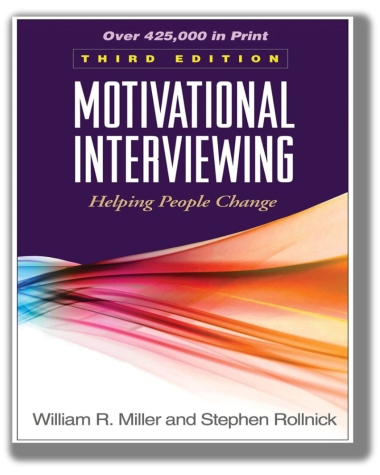
This bestselling work for professionals and students is the authoritative presentation of motivational interviewing (MI), the powerful approach to facilitating change. The book elucidates the four processes of MI–engaging, focusing, evoking, and planning–and vividly demonstrates what they look like in action. A wealth of vignettes and interview examples illustrate the “dos and don’ts” of successful implementation in diverse contexts. Highly accessible, the book is infused with respect and compassion for clients. The companion Web page provides additional helpful resources, including reflection questions, an extended bibliography, and annotated case material.
This book is in the Applications of Motivational Interviewing series, edited by Stephen Rollnick, William R. Miller, and Theresa B. Moyers.
New to This Edition:
*Reflects major advances in understanding and teaching MI.
*Fully restructured around the new four-process model.
*Additional case examples and counseling situations.
*Reviews the growing evidence base and covers ways to assess MI fidelity.
Pedagogical Features Include:
*Online reflection questions and annotated cases, ideal for classroom discussion.
*Key points at the end of each chapter.
*Engaging boxes with special topics and personal reflections.
*Extended bibliography and quick-reference glossary.
M (verified owner) –
This book is very well organized. Each topic is introduced and explained, and then later chapters explore the subjects more deeply. It’s like a semester course in book format – building on knowledge as you prgress through the chapters. Each chapter concludes with a well written summary.
The information is also presented in a very practical way – which is important to me as I am currently working as a health coach. Previous courses I have taken spend too much time on the history and philosophy and not enough on the practical applications of motivational interviewing. These authors provide plenty of real-life examples to make the information more meaningful and applicable. Not only are great coaching techniques presented with examples, they also offer common mistakes to avoid.
I am taking my time with this book and I am currently half way through. I can honestly say I am seeing an improvement in my connection with my clients (engaging) and more optimism and excitement for change in my clients. My personal confidence in my coaching has improved and I am enjoying my work more as a result of this book.
Not only has this book helped me improve my coaching and motivational interviewing techniques, it has inspired me to be a better coach and to continue to improve so that I can assist others in making lasting change. I highly recommend it to those wanting to increase their methods of assisting change, no matter what your coaching niche may be.
BRAT (verified owner) –
This book is for a MI class, and the contents are excellent. I learned things about myself that are enlightening and important to know about how I interact with people, it’s definitely a keeper. My only issues are that the quality of the paper is so thin you can see through it which is distracting when my eyes are tired. Also, the binding is strange. Pages don’t lay flat and it’s almost as if they were wet when bound, or it was bound too tightly.
Mona Awadh (verified owner) –
This is the book that paved my way and helped me to understand MI in a professional way. I am using it now along with other references to design my first training course for diabetes educators.
Dee Arr (verified owner) –
I was already familiar with MI but was taught using the principles from the 2002 edition. There are some major changes in this book (the authors states 95% of the book is rewritten). Most of the basic principles are the same, and changes are based upon the findings of the authors and others using the techniques and discovering what improves the techniques.
Miller and Rollnick walk through the different aspects of MI in a manner that makes the information accessible to newcomers yet is still interesting for those who are already familiar with Motivational Interviewing. For trainers, this book will enable you to easily update your classes and bring them up-to-date.
For those not familiar with MI, this book will help you to understand the collaborative conversation style that helps you to guide another to a decision while recognizing their autonomy and evoking their reasons to make a change. If you believe you will be able to read this book and walk away able to be an immediate expert in MI, you will probably be disappointed. However, if you embrace these teachings and begin to incorporate the techniques into your “conversational repertoire,” you will be on your way to understanding just how powerful Motivational Interviewing can be.
Ampupthevamp (verified owner) –
This is an excellent book for developing interviewing skills and learning how to be a motivating clinician. However, it would be helpful for the writers to be succinct or provide a more concise edition.
Ron Jellison (verified owner) –
A great book! A heavy read! I am not a sophisticated reader and this was apparent when reading this book. The content is Amazing! We have begun using the lessons in the book and have had better than expected results!
brg (verified owner) –
I’d hate to even call it a skill or tool. Once I became more comfortable with MI, I felt like I had a new attitude about how to communicate with patients. BUT reading a book OR taking a one day course alone will not be enough to learn it. Not because MI is complicated. Because I don’t think it is, and I think for those in the helping professions, some of this will come naturally to you. Coaching is essential as well. Do all of the things related to MI that you can, and slowly over time it will be easier to do.
Right now, at least at several of the agencies I’ve worked with, it’s become the latest fad to encourage staff to learn MI. But as admin only knows MI as the cool new thing to have their staff do, without understanding how it works, they sent everyone to an expensive 2 day course, with no follow up. That’s like sending someone to a two day piano class then asking them to play Mozart (and then being suprised and dissapointed they can’t play well).
So definitely use this book as a supplement, and ask for coaching or create a peer group to practice. Give yourself time and you will see why using MI is worth the effort. If anyone has any recommendations for subsequent books that provide ideas for training, practice or creating a study group, please share.
Meyuh (verified owner) –
Good read! Not my favorite therapeutic technique but I good read!
bbrown67 (verified owner) –
I bought this for professional development in my engineering job.
I would argue that the principles in the book and active listening techniques are excellent.
It’s the implementation of the “evoking” i.e. persuading technique that can be used manipulatively.
I suggest using this book more for personal reflection on spiritual values than for using in the professional workplace. It is geared towards therapists and health professionals to help people change.
JML (verified owner) –
book goes in depth with how to do MI
Michelle (verified owner) –
So glad I bought this…..great info!
Violin Dee (verified owner) –
Great book for learning motivational interviewing or just for learning how to positively interact with people who suffer from substance abuse. Great book for therapists!
Kiki Smith (verified owner) –
Learning a lot in my Interviewing techniques course, and this book is part of the course.