
Description
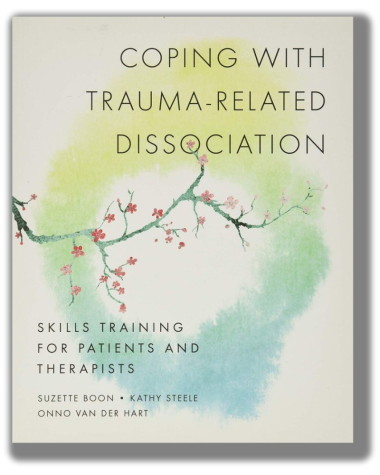
This training manual for patients who have a trauma-related dissociative disorder includes short educational pieces, homework sheets, and exercises that address ways in which dissociation interferes with essential emotional and life skills, and support inner communication and collaboration with dissociative parts of the personality.
Topics include understanding dissociation and PTSD, using inner reflection, emotion regulation, coping with dissociative problems related to triggers and traumatic memories, resolving sleep problems related to dissociation, coping with relational difficulties, and help with many other difficulties with daily life. The manual can be used in individual therapy or structured groups.
Sasha (verified owner) –
This book was in perfect condition and was shipped out quickly. I am completely satisfied with this pruchase. Such a great deal.
Dorothea L. (verified owner) –
It is a pretty good book. If you have a therapist who doesn’t seem to have any direction–this book could help either in session or on your own. It is long. Has various examples and homework.
jasmine (verified owner) –
I have found this book to be quite informative and helpful and would recommend it to anyone who has a dissociative disorder.
Kelly (verified owner) –
I love the way this book is organized! This has made the different types of psychotherapy easier to understand. I highly recommend this book.
climber (verified owner) –
I am a therapist. This is a nice book. If you are a high functioning individual with some dissociation seeking your own intelligent self-help resources or a therapist who works with clients who have trauma history, I think you will get a lot out of this book.
Liz Smith (verified owner) –
helpful in understanding what has to be worked through to help resolve DID
R (verified owner) –
This book is very helpful, especially if you are new to this subject. I did, however, think that it would go into a bit more depth. This is more lightly covering all the bases with quite a few guided question and viewpoint summaries at the end of each chapter. I can see how this would be helpful for a group or ideas for a therapist. This is more of a jumping off point to get you started than a carry you through the entire process. I can understand why they did this, as it states many times, therapy should be done with a therapist and not by yourself.
ouzola Customer (verified owner) –
This isn’t for the faint of heart. A deliberate but gentle, steady approach.
B. C. Poppe (verified owner) –
It is hard for me to read. As a patient there’s a lot of ‘Psycobabble’ in it. I have it to my therapist. The structure of the book is great and gives exercises for you and the therapist to work on.
Shelby Joy (verified owner) –
One of the best resources I’ve encountered for working with patients with strong treatment resistant DID. This book provides clear and easily relatable insight to the client and provides a wonderful roadmap for evidence-based practice for both therapist and patient. Highly recommended!
dp (verified owner) –
very good book
C. Smith (verified owner) –
I can’t say enough about this book. I had gotten very discouraged working with traumatized women and addicts. The first client I used this book with had been stuck for some time and was sinking deeper and deeper into despair, hopelessness, panic, anxiety and depression. She was also morbidly obese. After one session with this manual, she began to have hope, she engaged very actively in the treatment. One of the amazing things I see about working with these methods is that memories begin to surface spontaneously, as the client is ready, and within the context of the therapy, they feel safe to process and share the memories. In the case of this particular client, there was a facet of her abuse that haunted her immensely but she couldn’t say why. By the third session, a memory had surfaced which explained it, and she was able to cope with it and process it in session. I found it very interesting that the memory surfaced as a movie on a screen with no sounds or smells, which is something the book indicates will happen. This client, as well as others, are enormously reassured and encouraged by the fact that suddenly everything makes sense, they are not the only ones who feel this way, and that there are therapists who have tons of experience working with these symptoms, to the point that they were able to write a book that both explains and offers hope. I also work with a lot of addicts and have become convinced that almost all addicts suffer from DDNOS, and I believe that this treatment should be a part of any successful substance abuse treatment. When I introduce some of these ideas in a group of addicts, I have the full attention of every person, male and female. They start to ask questions an things begin to fall into place for them. This work is so miraculous that I have purchased a pile of books all dealing with Polyvagal Theory, Sensorimotor Psychotherapy, Viseral Sensory Neuroscience, etc, to further my understanding of how the viscera reacts to trauma, and the role of neuroleptic not and interception in triggering people to have panic, anxiety, and to carry out behaviors such as self harming, eating disorders and substance abuse. Clients are awed to find out that there is an answer to the formerly mysterious monster that controls them and devours them. I am continuing to read and study, and in the meantime I am reaching my clients in a way that I have never been able to before.
Andrea L. Stoeckel (verified owner) –
This is one very big textbook for therapists treating trauma related psychological disorders: from occasional flashbacks to true dissociative disorders. The difference being that both patient and therapist are addressed and given examples and teachings to help strong boundaries (re)develop.
It’s taken me months to read this book. Each chapter challenges even the most intelligent person to learn and incorporate skills for both life skills and emotional tools to stay present and healthy. I like that it seems to accept that humans are flawed. It is how we recognize and respond to past a/o present stressors, dissociative thoughts and behaviors and healthier sleep that keep dissociative patients stuck, because these old patterns are safe. To be a fully functioning person in the best sense, a book like this can give you life skills and roadmaps and to not be scared to accept the help out there.
As the authors say, this book, and this field are works-in-process. Overall, as slow as the read was, in this reviewers opinion it will help someone without “trapping” them into a set treatment. It would be a great book for Masters level counselors open to learning new things. 5/5
Customer (verified owner) –
I had actual tears of recognition in my eyes after starting this book; six months later, upon completing it, I feel like I have reached a milestone in my recovery from abuse. I felt understood by this book in a way that I never have before with a psychology or therapy text, except for Judith Herman’s Trauma and Recovery. This book is absolutely invaluable for someone with complex trauma in childhood, who used dissociation as their main defense mechanism.
I am somewhere on the dissociative continuum (I had symptoms resembling DID in adolescence), though it wasn’t identified as the source of my mental health problems until mid-adulthood, when I finally sought treatment for sexual abuse and trauma rather than depression alone, and then everything changed for the better. I started reading this as a follow-up to The Stranger in the Mirror (an excellent overview of dissociation), not expecting to get much out of this one, as therapy workbooks tend to be challenging for me. But I found myself highlighting every page.
It’s a gentler alternative to works that focus on sexual violence (many of which have helped, but those are hard to read when triggered). It’s also made grounding and mindfulness exercises more accessible for me, since these are written expressly with a dissociative/traumatized reader in mind. The language, too, is so clear and validating. Some chapters might be more triggering, depending on your experience– I was surprised that the relational stuff was harder for me– so personally I recommend skipping a chapter or section if you feel like you’re “fighting” with it, then returning to it later on. I had good luck with this approach. And don’t be afraid to spend more time on a challenging chapter. You’ll get out of the book what you put into it.
I wish I had encountered this book years ago, but I’m just so glad to have it now. Best $17 I’ve ever spent. I want to tell the writers thank you.
Jason C (verified owner) –
As a therapist specializing in the field of complex PTSD, dissociation, and Dissociative Identity Disorder, I highly recommend this book. It’s great as a stand alone book but works best when used with a therapist who understands and is trained in treating dissociation. It’s important to understand what this book is. This book will not cure your trauma, no book can! It’s a book designed to help you understand why you are the way you are, give you skills to help yourself, your ability to cope, improve your daily life and your relationships with others. This book is a huge gift, and is really the gold standard. Actually resolving the trauma itself and healing it–which is causing your symptoms in the first place–takes a therapist trained in something to do that such as EMDR, Somatic Experience, Sensorimotor Therapy, or Internal Family Systems.
Tippi1111 (verified owner) –
As a clinician, I cannot recommend this book highly enough. It is chock full of useful information and it contains many useful exercises to assist in a person’s healing. My only complaint about this book is that the font is extremely light, making it cumbersome to read. I hope the printers/designers will do something to make the book more user-friendly.
Shawn N. Hatton (verified owner) –
This is a fantastic resource for anyone struggling with depersonalization, derealization, or any other dissociative symptoms from past trauma. I recommend the print version because there are many exercises that you’ll want to refer back to.
AmethystWoman (verified owner) –
Yeah, it’s not cheap and there’s a good reason for that. This is one of the best go-to books esp for people new to DID. (Dissociative Identity Disorder.)
I did myself a favor and also bought the audio file so I could listen to it as I read. I do better with immersive reading but also, in a system, some read better than others? So glad I could do that. Sometimes however, there is no play button for the audio when I open it on my phone or tablet. I don’t know what that is about. From Audible, I wouldn’t expect the attached audio file to be sketchy? Odd.
But really, a very good book. It is suggested that you do this when you have a therapist to do each chapter with you. I agree. Make sure you have a therapist who knows how to treat people who dissociate.
Ticorella (verified owner) –
This book is a treasure of important, well-researched information for any therapist working with complex trauma and any person working on healing. It is easy to understand and a good complement to ego state or internal family systems therapy, and also EMDR. It instills hope and manageability for those experiencing frightening, intense feelings and behavior. Each chapter has worksheets and exercises to promote healing and integration of the material. Yes it’s expensive, and also an excellent value.
Claire (verified owner) –
My therapist recommended this to me and it’s been very useful and insightful especially the section on sleep
I am happy with the gua shas. I use them a lot to reduce the lumps under my trigger fingers. The swelling doesn’t stay gone but my fingers hurt much less..er my fingers (verified owner) –
Not difficult to read. A lot of information.
Pam Glindeman (verified owner) –
If you want to educate yourself on this mental health topic, as an ally, family member, professional, or patient, this text is extremely helpful, knowledgeable, and easy to follow.