
Description
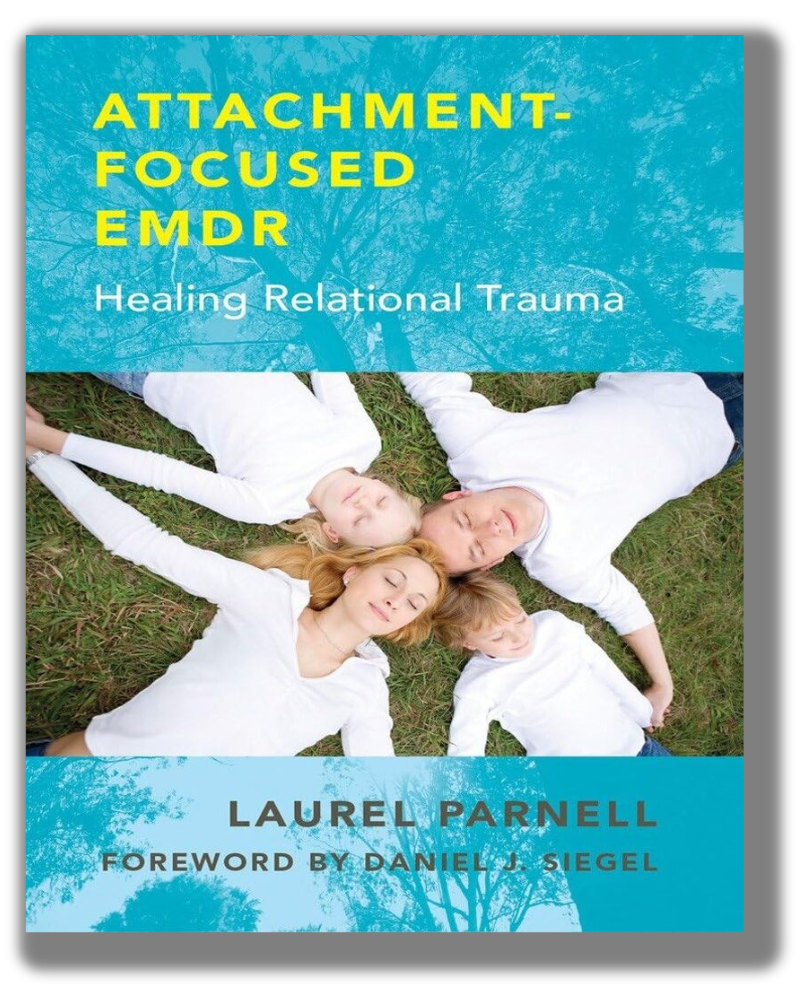
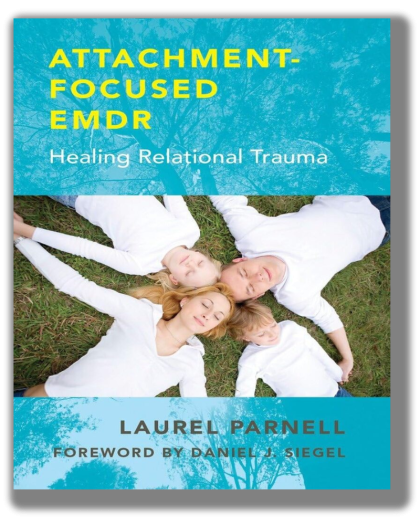
Integrating the latest in attachment theory and research into the use of EMDR.
Much has been written about trauma and neglect and the damage they do to the developing brain. But little has been written or researched about the potential to heal these attachment wounds and address the damage sustained from neglect or poor parenting in early childhood. This book presents a therapy that focuses on precisely these areas. Laurel Parnell, leader and innovator in the field of eye-movement desensitization and reprocessing (EMDR), offers us a way to embrace two often separate worlds of knowing: the science of early attachment relationships and the practice of healing within an EMDR framework. This beautifully written and clinically practical book combines attachment theory, one of the most dynamic theoretical areas in psychotherapy today, with EMDR to teach therapists a new way of healing clients with relational trauma and attachment deficits.
Readers will find science-based ideas about how our early relationships shape the way the mind and brain develop from our young years into our adult lives. Our connections with caregivers induce neural circuit firings that persist throughout our lives, shaping how we think, feel, remember, and behave. When we are lucky enough to have secure attachment experiences in which we feel seen, safe, soothed, and secure—the “four S’s of attachment” that serve as the foundation for a healthy mind—these relational experiences stimulate the neuronal activation and growth of the integrative fibers of the brain.
EMDR is a powerful tool for catalyzing integration in an individual across several domains, including memory, narrative, state, and vertical and bilateral integration. In Laurel Parnell’s attachment-based modifications of the EMDR approach, the structural foundations of this integrative framework are adapted to further catalyze integration for individuals who have experienced non-secure attachment and developmental trauma.
The book is divided into four parts. Part I lays the groundwork and outlines the five basic principles that guide and define the work. Part II provides information about attachment-repair resources available to clinicians. This section can be used by therapists who are not trained in EMDR. Part III teaches therapists how to use EMDR specifically with an attachment-repair orientation, including client preparation, target development, modifications of the standard EMDR protocol, desensitization, and using interweaves. Case material is used throughout. Part IV includes the presentation of three cases from different EMDR therapists who used attachment-focused EMDR with their clients. These cases illustrate what was discussed in the previous chapters and allow the reader to observe the theoretical concepts put into clinical practice—giving the history and background of the clients, actual EMDR sessions, attachment-repair interventions within these sessions and the rationale for them, and information about the effects of the interventions and the course of treatment.
LadyG’Diver (verified owner) –
Laurel Parnell brings heart and soul to EMDR and I eagerly awaited this her latest book which has at last arrived. It describes in wonderful detail how to work through the trauma of disrupted attachment so that we and clients can feel safe enough to heal the later traumas of our lives. She addresses so well the need to help clients feel safe enough to do the healing work which may involve just “tapping in” many resources or may progress to EMDR processing which can be safely adapted for the client with attachment wounds. An essential book for any therapist using EMDR given that 40% of us have experienced disrupted attachment.
Nancy Ewing (verified owner) –
Laurel Parnell, Ph.D., clinical psychologist and international EMDR trainer and consultant, just published Attachment Focused EMDR (AF-EMDR) in late 2013. It brings together the culmination of her years of experience, evolved thinking and insights in doing, demonstrating and teaching EMDR and now AF-EMDR. Her book is an invaluable must for EMDR therapists who want to take their work to the next level. It is a clear, well organized, in depth, compassionate exposition of how to do AF-EMDR with clients who suffer early attachment wounds. She draws on Mary Main’s, Ph.D. research on secure, ambivalent, avoidant and disorganized attachment styles. Dr. Parnell describes characteristic deficits in the sense of self and relationships of people who may fall into the latter three attachment styles and what they need in terms of AF-EMDR. She presents evidence that AF-EMDR changes the brain through laying down integrative and positive neural pathways. She inspires us with evidence that clients with traumatic childhoods can heal and develop what she calls “earned secure attachment” through the therapist’s skillful empathic attunement to them and the neural network processing of AF-EMDR work.
Dr. Parnell explains how to proceed doing AF-EMDR sessions utilizing the Modified EMDR Protocol. Each session begins with positive resource installation before identifying the client’s disturbing image, emotions, body sensations and negative cognition. Then it proceeds to the desentization phase–processing (with bilateral stimulation) the activated trauma memory networks until reaching a SUDS of 0 or 1 (with body scanning to check that processing is complete). It follows to installation of the positive cognition that arises spontaneously with the evolved picture, and ends with closure and debriefing. She explains how the Modified (simplified) Protocol that she teaches allows the client to freely process memory networks and how the more complicated Standard Protocol disrupts processing.
Dr. Parnell addresses the importance of assessing the client’s capacity to process trauma and of installing positive protective resources before proceeding with processing. She explains how to identify the “target” and the technique of “bridging” that often takes the client from present to childhood trauma. She discusses how to bring attachment focus to the desensitazation phase of AF-EMDR and to navigate the client’s processing of memory networks and when to return to “target”. She elaborates on the use of “interweaves” to unblock processing and to faciliate integration of the adult with the child’s perspective. She describes techniques to manage overwhelming abreactions, flooding and looping in the client’s processing of traumatic memories and to maintain their sense of safety. She highlights the technique of guiding the client to develop a reparative “new mother or father” and filling in their developmental deficits with their imagined nurturing parent. Her book is filled with cases and examples of AF-EMDR sessions carried out by herself and EMDR therapists she has trained. The cases and sessions are poignantly illustrative of the specific techniques she teaches in each chapter. She advocates that doing AF-EMDR with clients who have early attachment wounds be done with consultation by a certified EMDR trainer.
yo (verified owner) –
Muy bueno. Lleno de ideas y variaciones sobre el protocolo estandar. Muy util para trabajar con personas con deficits de apego. Lectura fresca.
SR (verified owner) –
Thank you for a comprehensive overview of attachment focused EMDR! What a gift to our profession and to our clients who need healing from childhood neglect and/or emotional abandonment.
Sincerely,
Sonja Rudie, MA, LMHC, CSAT
Bellevue, WA
Sarah Chana Radcliffe (verified owner) –
This is one of the best professional books I’ve read in years! Laurel Parnell describes her strategies and her thought processes so clearly that the reader feels “tutored” in her technique. I love her deep understanding of the inner processes of both client and therapist and her compassionate guide for healing. She shows us how to safely guide a client from the very beginning of therapy all the way through complete healing, carefully building and utilizing internal resources to replace the gaping deficits left by relationship trauma. Parnell gives her own suggestions for modifications to the standard EMDR protocols – validating the observations and experiences of all of us who have used EMDR with this population. This book will help any therapist who works with adults who have experienced emotional wounding in childhood (which is every therapist) and particularly those who are trained in EMDR.
Sarah Chana Radcliffe, author “Raise Your Kids without Raising Your Voice,” and “The Fear Fix.”
Jeffery S. Herman (verified owner) –
As a long-time EMDR therapist, this book is a breath of fresh air. She says a lot of things I have found to be true, mainly about how the standard EMDR protocol pulls the client out of processing if it is applied blindly. She gives excellent suggestions on how to customize EMDR To the needs of the individual client.
Some of the most difficult clients are those who suffered attachment wounds in early childhood. I’ve used the techniques from this book and had good results. The Modified EMDR protocol Dr. Parnell identifies is rapidly becoming my standard protocol.
BTW, I emailed her company with a question about one of her distance-learning programs. She replied personally.
Sandy (verified owner) –
Bringing EMDR and Attachment Theory together seems to be a stroke of genius. I keep seeing statistics that claim that about 50% of the population is ‘securely attached,’ but I have my doubts – from the amount of relationship difficulties I’ve experienced, and witnessed in so many others, I think that figure is way too optimistic. We need as many tools as we can get to help folks learn how to ‘do’ relationship a whole lot more mutually satisfyingly…
Laura Barkwell (verified owner) –
Dr. Parnell is an expert trainer and clinical counselor in my opinion. From attending her training and reading her books, I find her information is congruent and true to actual clinical practice with clients.
Janet Laufenberg (verified owner) –
Best resource on use of EMDR I have read. Most holistic and reality based approach for experienced therapists working with trauma.
Jamilo (verified owner) –
Praticienne EMDR, j’ai trouvé ce livre très utile pour le traitement des cas complexes. La partie concernant les ressources m’a semblé tout particulièrement utile. Un très bon complément à la formation de base en EMDR. L’anglais utilisé est simple, le langage de l’auteur est clair, mais c’est tout de même en anglais… A quand la traduction?
Kathy (verified owner) –
This book gives effective and concrete tools to utilize with clients, especially ones who need more resourcing / front end work before being able to process complex traumas. I am happy to find a way to integrate attachment theory concepts with EMDR. Laurel Parnell is amazing!
Sarah A Mills (verified owner) –
The book came in beautiful condition and I have started to read it.
Mary L (verified owner) –
excellent in the information it provides. Helpful to me.
Cat Lover (verified owner) –
Contains come concrete, very helpful guidelines on helping pt’s with trust and attachment problems. Clearly and lucidly written.
Anthony Freire (verified owner) –
Great read and gives you a greater understanding of how to bring attachment theory into your EMDR sessions…. a must read for any EMDR therapist who deals with patients experiencing any kind of attachments issues.
Sandra (verified owner) –
Excellent information and training techniques in easy read format. Love it-will refer to it often!
Jitendra (verified owner) –
Almost like a course text book and I like the modified protocol Laurel Parnell uses. I will read it again and again. Pity a German translation is not available!
Anne BC (verified owner) –
Laura Parnell is an extremely talented therapist/healer. I am grateful to have attended her workshops and for her open sharing her work in her books. I am particularly happy she has written this one from an attachment focused perspective. Very insightful, with an abundance of helpful ideas for therapists who use EMDR.
Jack Silvey (verified owner) –
am layperson EMDR enthusiast, have read many books and practiced on myself, book has great insights and is spot on
removes a lot of the unnecessary clinical pieces, makes the counselling more approachable and flexible
Peggy (verified owner) –
This is important information on the use of EMDR to provide therapy for people with early childhood developmental issues and traumas.
Philomena Moriarty (verified owner) –
A must for EMDR therapists
Sue W (verified owner) –
This book exceeded my expectations. A must for anyone working with clients with complex Post-Traumatic Stress Disorder. The resource development chapter alone is worth the cost of the book.
Nighthawk (verified owner) –
Was a gift for an MFT friend. I am not able to offer a review of the book itself but the friend was quite pleased to have received it as an aid in their practice.
George Mosby (verified owner) –
A very thorough and inspiring book about adding “interweaves” such as protector or rescuer figures or other remedial attachment figures to support people undergoing EMDR therapy who need greater internal support systems to rely upon.
Richard Henault (verified owner) –
awesome info
Truthsayer62 (verified owner) –
I love this book so much that I went back and bought copies of all her other books back 20 years on EMDR. I even bought her video workshop on attachment focused EMDR. I find her approach to EMDR incredibly therapist and client friendly. Classic EMDR doesn’t work on all clients. This form of EMDR helps give all clients coping resources to deal with trauma. I highly recommend that you also buy Tapping In because it breaks down exactly how one “taps in” and does “resourcing” for attachment focused EMDR.
Ryna (verified owner) –
Very comprehensive and helpful with plenty of case examples that serve as demonstrations of the work.
Julie Shill (verified owner) –
An outstanding in-depth support to administer EMDR
Anne Pitts (verified owner) –
Brilliant book very well written and easy to follow
TerryAnn (verified owner) –
Game changer. Puts it all together and presents a workable path forward through use of EMDR.
S.Kane (verified owner) –
I am an EMDR therapist, this book has been invaluable in my work with attachment related traumas, and I HIGHLY recommend it for any practitioner using EMDR as a modality. It is non-pathological, and fits with Client-centered psychotherapy work. Thank you for writing this book.
SMJ (verified owner) –
This is a great resource for EMDR practitioners working with attachment issues. I am really finding the practice of tapping in resource figures with the client helpful.
Chosey buyer! (verified owner) –
Excellent reference book.
JaRyHnt (verified owner) –
If you are EMDR Trained and are working on EMDR Certification, this is an exceptional emdr resource. It is like having a conversation with the author. She answers every question you start to think to ask and responds to questions you will need answers to. It’s very detailed, specific examples, resourcing scripts, and I really like the case study examples. Her use of EMDR attachment techniques are insightful, beneficial and practical.
Ana Vera Ramos (verified owner) –
É necessário conhecer ter o conhecimento básico de EMDR para ler e compreender o protocolo proposto por Parnell. O livro é bem didático, penso ser indicado para profissionais da área.