
Description
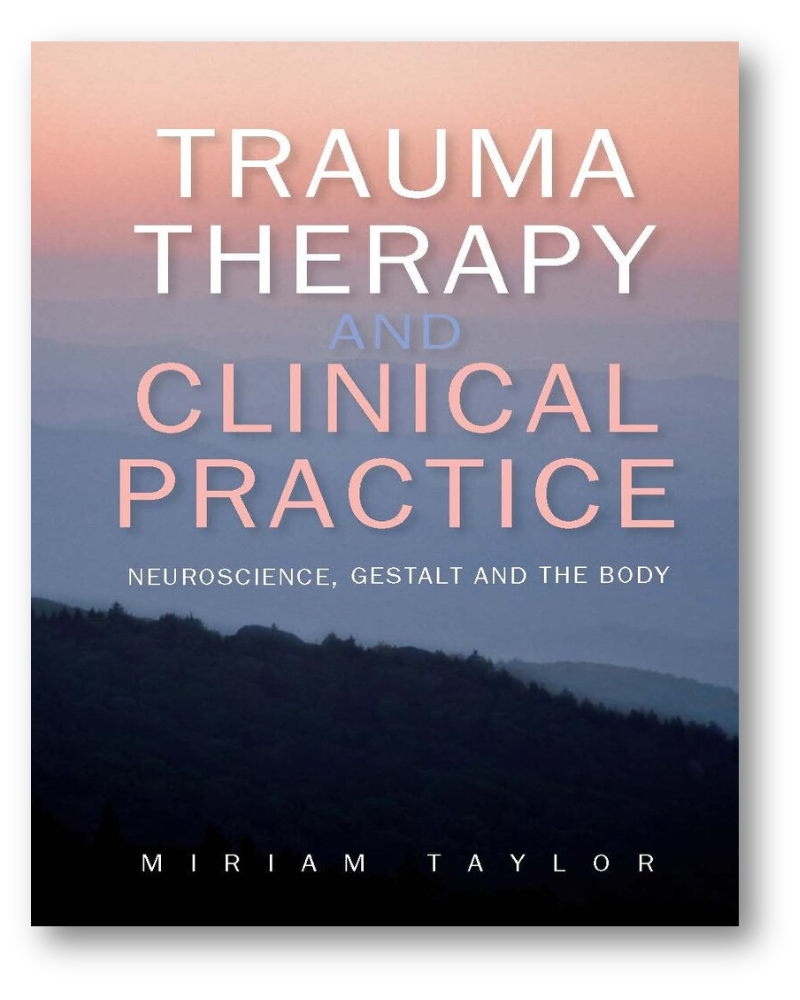
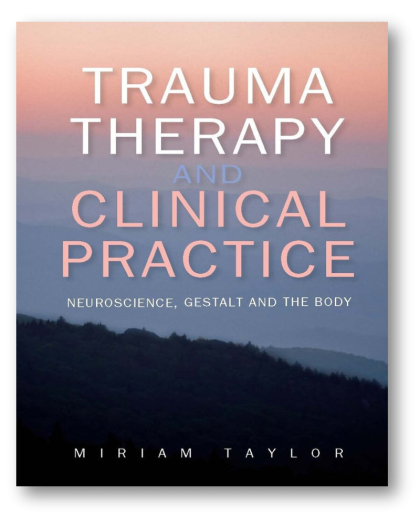
Therapy with traumatised clients can be fraught with problems and therapists working with these clients seek greater understanding of the specific problems they encounter. Trauma Therapy and Clinical Practice weaves together neuroscience research and the experience of trauma, taking a fresh look at how original Gestalt theory informs our current understanding of trauma therapy. The book:
- Places trauma and trauma therapy in a relational field model
- Includes material on change processes, triggers, dissociation, shame, enactment and resources
- Describes clearly the neurobiology of trauma and the role of the body in maintaining trauma reactions and in the recovery process
- Offers experiments for deepening the therapist’s embodied presence
- Provides numerous clinical examples and an extended case studyMiriam Taylor offers readers a theoretical basis for interventions and shows how simple Gestalt concepts can be applied in trauma therapy. By creating the conditions in which awareness, choice and vitality can grow, contemporary relational Gestalt is shown to be exceptionally well suited for trauma clients.
The book is presented in three parts covering theory, the phenomenology of trauma and the therapeutic relationship. Including a glossary for readers unfamiliar with Gestalt therapy, case studies and reflection points, this book is a thoughtful and coherent guide for trainees and practitioners in counselling and therapy.
“Miriam Taylor has done a simply tremendous job in articulating an expanded Gestalt approach to trauma treatment that is informed by, and integrated with, modern neurobiological approaches to trauma … This book should be read by everyone treating trauma and I expect it to become a foundational text in our field.”
James Kepner, Gestalt therapist and international trainer in Gestalt Body Process Psychotherapy“Taylor’s book is a theoretically and clinically sophisticated approach to working with trauma from a phenomenological vantage point. Her book hadan immediate effect on my work.”
Lynne Jacobs, co-founder, Pacific Gestalt Institute, USA“Destined to become a classic in Gestalt therapy literature. Well-written, insightful, compassionate, and practical, it will assist many a therapist.”
Malcolm Parlett, Visiting Professor of Gestalt Psychotherapy, University of Derby, UK (now retired)“I am profoundly grateful to Miriam Taylor for writing this book. I just wish that she could have written it before 2002 when I began my own training in Gestalt psychotherapy. There is a section at the beginning called ‘Praise for this book’ which includes very positive prepublication comments from Malcolm Parlett, James Kepner, and Lynne Jacobs. Now that I have read the book for myself, I find myself in agreement with their comments and want to add my own round of applause … I consider that Taylor has made a major contribution to our field in taking this enterprise forward.”
British Gestalt Journal2014, Vol. 23, No. 2, 47–58“Taylor’s remarkable contribution is a reminder that Gestalt Therapy Theory is alive and kicking and demonstrating how Gestalt can and should become the therapy of choice for trauma workers.”
Review published in Self and Society
B. Wolinsky (verified owner) –
Miriam Taylor gets right to the point; trauma is a threatening event that a person can’t cope with. The reasons for the inability to cope are wide, but the most prominent one is that it outweighs the patient’s resources. The event is something more powerful than the emotional strength, and when it’s over, it stays with the victim. There are implications with regard to therapy, involving emotional problems, and neuroscientific ones, involving chemicals. The body uses hormones in all functions, and while some can create balance, others can lead to neurosis, elevated heart rates, slow heart rates, and other problems. Persons who’ve suffered emotional trauma are likely to have both.
Gestalt Therapy is widely discussed in this book, because of its focus on the self. Trauma can lead to a kind of disassociation, a feeling that you’re not all there, and the patient can develop feelings of passivity. The Gestalt approach is used to get the patient to examine their personality, and what they want to be versus what they think they are. Is the patient trying to be something he is not, but unable to see it? Is she creating a persona of being more powerful then she is, like a grandiose delusion? Does she think she’s weaker than she is?
One of the case studies involves a 48 year old woman, still traumatized by a rape that occurred 30 years earlier. The rapist was her college professor, and she was still in fear that he’d track her down. The goal of the therapy, in this case, was to examine her relation to the abuser in the present. How old would he be now? Would he be capable of hurting her again? By having the patient examine what she is capable of doing now, with regard to defense, she can work towards overcoming the pain. Though not mentioned in this book, comedian Tom Arnold had a similar problem involving sexual abuse. He claims he was sodomized by a teenage babysitter when he was a child, and that it left him with emotional scars. As an adult, he tracked down the babysitter, now a grown man, and not as physically powerful as Arnold was now. He confronted this man, and it helped him to deal with the anger. He also prevented the man from adopting a child, but that’s another story.
In Chapter 6, Taylor gives a scenario about the response to fear, involving a public melee. She says the following: “imagine you’ve come out of a movie theater, and you see a brawl spill into the street, the mob runs past you, windows get broker, and you duck into a doorway.” Then she proceeds to list the physical symptoms you may have; heart beating fast, sweat, trembling hands, skin feeling hotter or colder. These are all signs of trauma, and as far as “ducking for cover” goes, it would be a decision, or an impulse. Most would rely on impulse, while other would “keep their head” and look for an escape. The one who keeps his head and thinks under pressure is less likely to be traumatized. But not everyone can do this.
With regard to the Chapter 6 scenario, I am reminded of the 20/20 episode titled “If Only I Had a Gun.” The show featured a mock classroom shooting, and a volunteer is given a paintball gun and told to fire on the gunman. The result is that even the armed students would get killed, and the reason is fine motor control. In a panic, you can lose control of your fine motor skills, which might cause you to fumble with the gun. You can lose your fine cognitive skills as well, which could lead you to panic further. While police (I hope) are trained for these situations, the average person is not. That’s why civilians are likely to be traumatized by single violent encounters. As for the police, perhaps repeated violent encounters can lead to trauma?
Trauma was not well understood until recently. I’d wager that a sizeable number of WW2 veterans had it when they returned, as we saw in the case of Ira Hayes (immortalized in the Johnny Cash song.) Audie Murphy, the most decorated veteran, definitely had it. In the 1970’s, a lot of the men living on the Bowery in NYC were alcoholic WW2 vets, and they probably had psychological problems from the war that were never treated. Maybe the treatment just didn’t exist? Or perhaps, as we see in the book “Clinical Manual of Cultural Psychiatry,” which I just reviewed, there was a stigma to therapy. A lot of people see therapy as a thing for the less tough, and they refuse to seek help. The results are anybody’s guess.
S A Doherty (verified owner) –
Thank you
Anthea Wemoon (verified owner) –
A great read.
ursula blumenthal (verified owner) –
Best book on integrating a relational and body-oriented approach to trauma work.
J A Roberts (verified owner) –
Fantastic book, great coverage, in-depth and accessible to all modalities
Elina (verified owner) –
A coherent narrative about trauma therapy, merging together gestalt therapy and neuroscience. A result is a nice adaptation of gestalt therapy for working with traumatic experiences.
Gestalt therapist (verified owner) –
Excellent book well researched and written
A must for any one interested in this subject