








Description
mpowering strategies for anyone who works with children and teens on the spectrum.
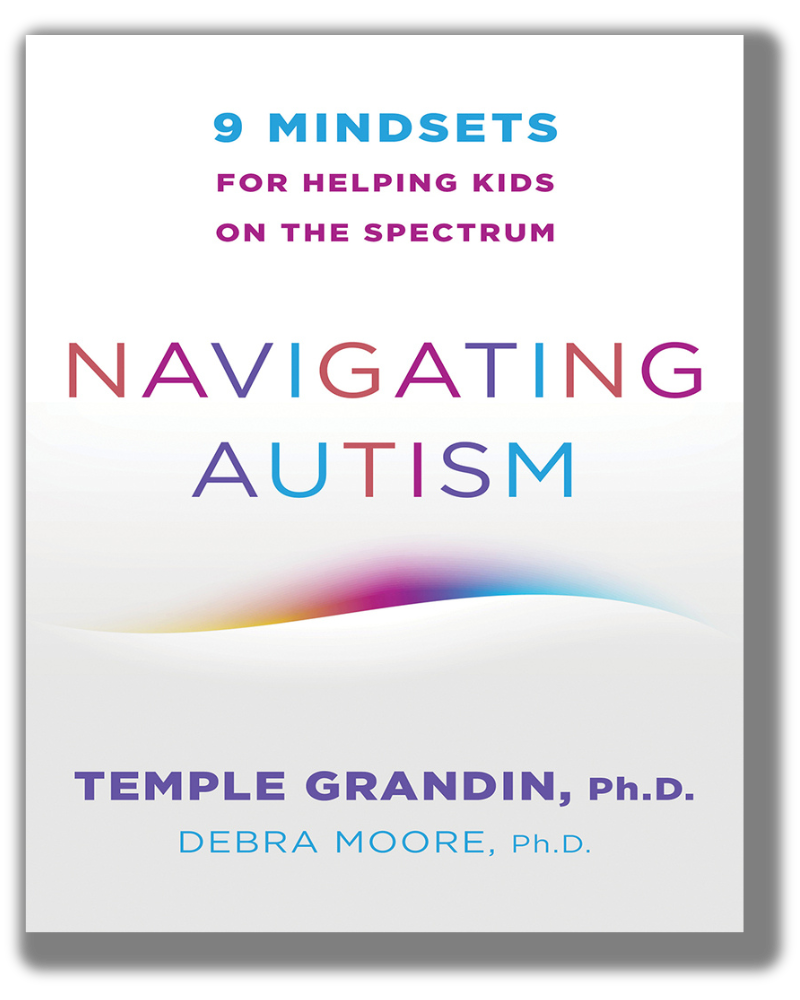
International best-selling writer and autist Temple Grandin joins psychologist Debra Moore in presenting nine strengths-based mindsets necessary to successfully work with young people on the autism spectrum. Examples and stories bring the approaches to life, and detailed suggestions and checklists help readers put them to practical use.
Temple Grandin shares her own personal experiences and anecdotes from parents and professionals who have sought her advice, while Debra Moore draws on more than three decades of work as a psychologist with kids on the spectrum and those who love and care for them. So many people support the lives of these kids, and this book is for all of them: teachers; special education staff; mental health clinicians; physical, occupational, and speech therapists; parents; and anyone interacting with autistic children or teens.
Readers will come away with new, empowering mindsets they can apply to develop the full potential of every child.
6 figures
Mary Gonzalez (verified owner) –
I love this book. I have not finished reading it but what I have read is enough to know that it is very important information for anyone who is very close to an individual who has autism.
Rosanna (verified owner) –
Love this book! The first few pages I have already learned so much.
arlena (verified owner) –
My grandson has autism and ADHD and my daughter is looking her mind trying to deal with it.this will be a gift to her
Michael Philliber (verified owner) –
Throughout the years I have interacted and worked with children and adults who find that they have some form of autism. So, I am always looking for material that is helpful and practically useful for parents and professionals on the subject. Therefore, I was elated when the authors notified me that they had just published this 384-page softback, “Navigating Autism: 9 Mindsets for Helping Kids on the Spectrum”. Temple Grandin, best-selling author, prolific speaker, and Professor of Animal Science at Colorado State University, and Debra Moore, psychologist, and Founder and Director of Fall Creek Counseling Associates in the greater Sacramento Area, have teamed up on this manuscript and handed parents and professionals a well-researched, but easy to read dossier. Readers of all stripes will find it engaging and practical as they seek to walk with kids and young adults who are dealing with some level of autism.
The book takes the approach that there are nine mindsets parents and professionals should incorporate as they help young people on the spectrum grow and develop. As the authors note, they “strongly believe that if the adults interacting with autistic children stay grounded in the mindsets presented in this book, each child has a much improved chance of reaching their fullest potential than otherwise” (xiii) and, using “these nine mindsets will help you see more progress and bring out each child’s unique and maximum potential” (4).
The nine chapters break down each mindset with advantageous research and guidance. One will quickly pick up that in each chapter there are valuable directions for both mothers and fathers as well as counselors and clinicians. Grandin and Moore are taking a bigger approach to this subject because they see the need for a whole-team tactic to maximize the growth of a non-neurotypical child. Nevertheless, some chapters lean more heavily toward the parents, and other chapters lean more heavily toward the professionals. But it all works together for the best! Moms and dads need to know what the evaluators and therapists are up to, and the professionals need to be alert to what the parents are being steered toward.
For example, the second and third chapters address evaluators and counselors as they test and plan out interventions. The authors present important details, with several examples, so that professionals have a bigger picture in mind as they assess the child. And yet, the fourth and fifth chapters inform the parents of the medical conditions that often attend to autism, such as gastrointestinal issues, and sleep problems. But also, the mental health issues that can appear with those on the spectrum, such as increased rates of depression and suicidal ideations. I mentioned how this book related that the increased incidences of depression and suicidal thoughts came along with autism to a parent whose child is on the spectrum. She breathed a sigh of relief and said, “That is so helpful! I feel like our experiences are not so abnormal. I feel acknowledged.” This is an important book!
One of the initial concepts in “Navigating Autism” that I find deeply significant is that every child is more than their autism. As the authors warn, once the autism label is used by professionals and parents, “they will apply that image. This happens a lot to people with autism. Once we label someone, we also risk creating an oversimplified snapshot of that person. Once a person gets labeled, people’s opinion of that person may never change…you should always look beyond labels and see all of their strengths and features” (1-2). This is true, not just of autism, but for many other label-laden issues.
“Navigating Autism” is the kind of book that will give dads and moms a shot in the arm as they long to aid their autistic child’s development and growth. It will be useful in professional practices to help counselors and psychiatrists as they approach the child and include the family in that child’s wellbeing. This is a must-have and must-give-away book! I highly recommend it.
My glad thanks to the authors who reached out to me and asked if I’d be interested in reading and reviewing the book. They happily sent me a copy, and I used it for this evaluation. There were no hostages taken in the process, no demands or diktats given to me, and no animals were hurt in writing of this analysis. These sentiments are freely made and freely given.
DW (verified owner) –
I work in Applied Behavior Analysis as an RBT first and now in my company’s admin office. My son was diagnosed with autism, so I bought this book as a way to access autism through another perspective outside of ABA and as a parent. The book has wonderful insight and provided me with a vocabulary that I did not yet have to articulate my son’s strengths, my worries about his deficits, and provided me with a framework of thinking to better understand my son now and in the future, as he is still a toddler. I think that this book is probably more for clinicians, however, in that it describes in great detail how doctors who diagnose should assess their clients. So I would not suggest this book in its entirety to my mother, for instance, who would not benefit from that call to action for clinicians; however, I would and will copy out some sections for my parents to read who are still learning about autism.
Dr. Connie Lillas (verified owner) –
A good insight into Temple Grandin’s view of Autism at this later stage in her life.
benna (verified owner) –
Gift for my daughter-in-law that is a teacher for autistic children. She thought it would help her alot. I am hoping that it will. Some of them need her help more than others.
Bill Taroli (verified owner) –
Has a lot of useful advice.
Helen Wheeler (verified owner) –
Another winner from Temple Grandin
T (verified owner) –
Temple Grandon is an amazing writer… And person. Very interesting book.
J. S. (verified owner) –
I would say that this book is not for absolute beginners in the ASD field. I liked that it had different perspectives, teacher and parent. This helps strengthen each view when considering a couple different angles. I have read a lot – a lot of psychology books on aneurotypicals. This was a wonderful addition! I wish they went just a bit further in this book or put one out similar for older teens to young adults. It is difficult to find books for those past high school with late diagnosis. Combining a therapist and Temple’s view was the perfect mix!! There was a lot of information I had not previously read. The section on what the initial diagnosis should include was super! If you have a family member or friend who is going thru the process, that section alone was worth the price of the book. I typically buy recycled books, this was completely worth the new price tag!
Tanya Modispaugh (verified owner) –
I purchased this book for a friend. I was only able to read part of it before I gave it to her but I loved what I got from it. I know it helped her feel better and work better with her child.
Eda B. (verified owner) –
I am full of praise for this well written book and found it very helpful in better understanding autism and how to effectively navigate with a child on the spectrum.
Jennifer Trevino (verified owner) –
I like this book, but I like Visual Thinking the most!
Star (verified owner) –
Paper quality is so good.
Cameron Roy (verified owner) –
10 pages into this book , I had already gain significant insights into how to work with children with autism.